
The Gymnopédies are piano pieces that sound as if the music had decided to suspend the argument and remain floating, like a half-formed thought. Slow, ceremonial, without haste or climax. They are sonorous steps to nowhere.
The title itself is a private joke. “Gymnopédies” refers to Spartan dances performed by naked young men—although, in the case of Erik Satie, he may have invented it while laughing between sips of cheap wine. Because his thing was always a kind of neoclassical irony, beauty without the intention to seduce, emotion without exhibitionism. “I came into the world very young, in a very old age,” he said, and he also composed it.
Listening to them is like entering an empty gallery where there is only one painting hanging, which you will never know if it is art or minimalism with a superiority complex. The harmonies move with an almost clinical slowness, as if each chord were having tea before deciding whether or not to modulate. Neither urgent nor decisive, we hear in them a music that is in no hurry to prove anything. As he himself confessed: “Before writing a piece, I think it over several times, accompanied only by myself.”
Gymnopédie No. 1 has become the most famous: a slow-motion waltz that sounds as if nostalgia had become French and learned to smoke. Sadness in a low voice, tears that dress well.
The other two Gymnopédies, less famous but equally imperturbable, continue the parade with the same anesthetized cadence. No. 2 is almost a shadow of the first, gloomier, more closed in on itself, as if doubting its own need to exist. No. 3, on the other hand, borders on a tenderness dangerously close to sincerity, but without losing its composure: a melancholy that apologizes in advance. Together they form a triptych of refined indifference.
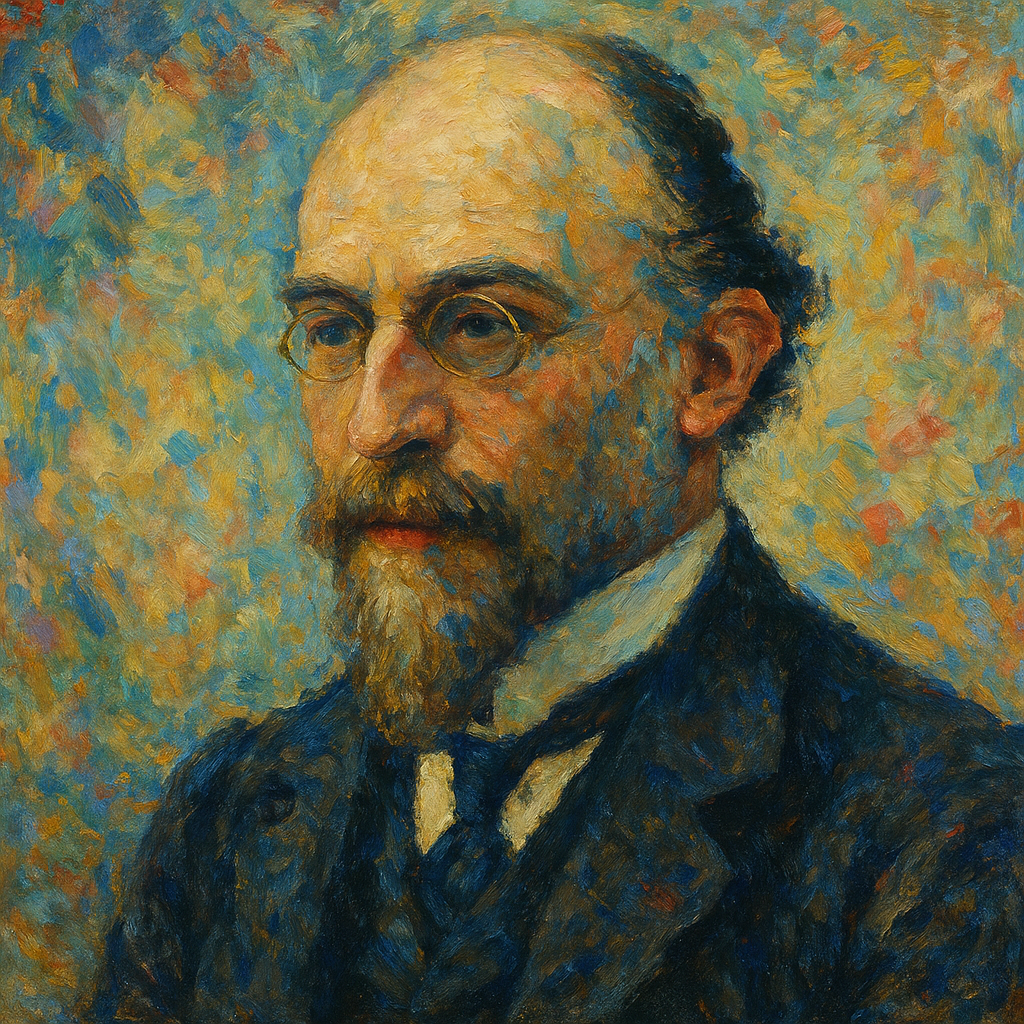
He was a parodist disguised as a mystic, and that is how he used to introduce himself: “My name is Erik Satie, like everyone else.” While others composed to redeem the soul, he did so to showcase the style that underlies certain disenchantments. Nothing in the Gymnopédies seeks to move, because everything in them resonates as if silence had learned to speak with a Parisian accent.


