
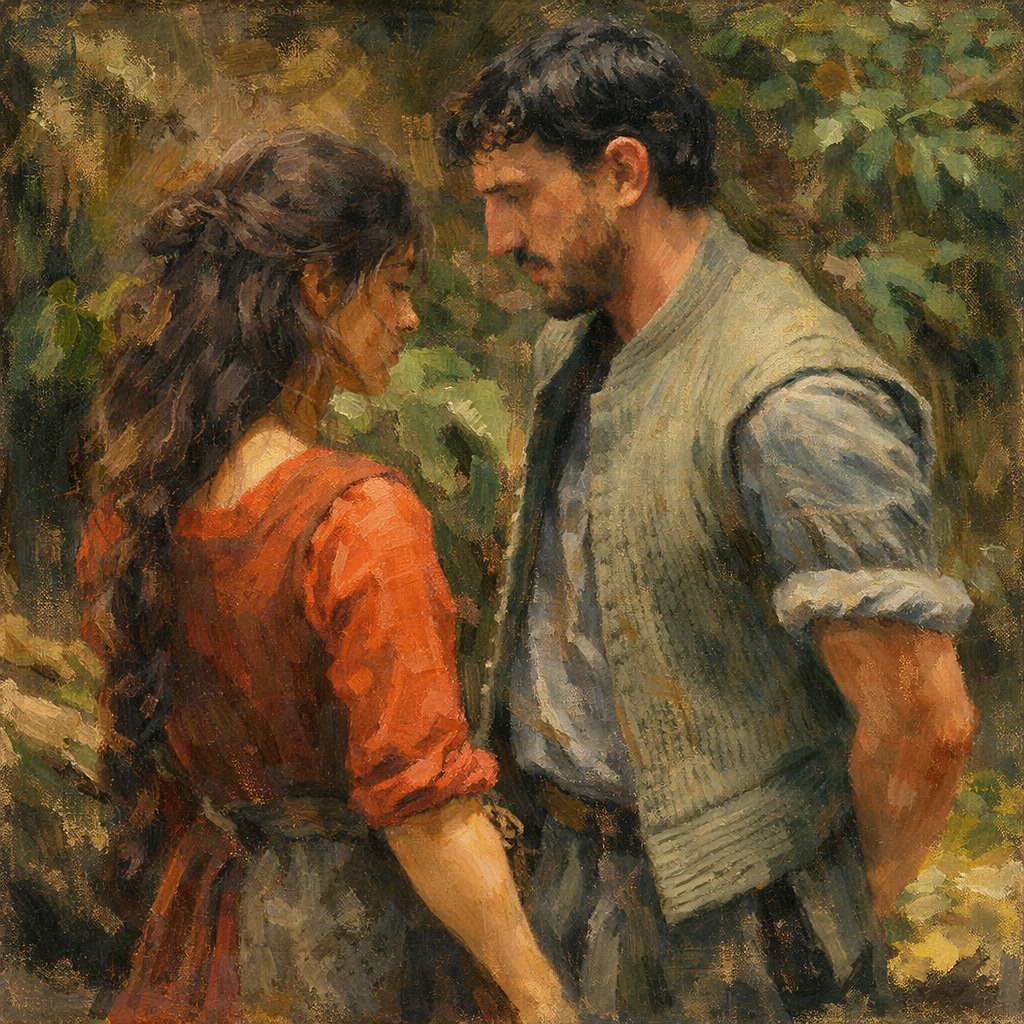
You are braver than original when, at a time when cinema still remains faithful to William Shakespeare, a director like Chloé Zhao treats the Bard with the refinement of Hamnet (2025). It is a film marked by such striking restraint that it never breaks its license of recollection—an almost silent aesthetic—in order to unfold with complete spontaneity. Discretion is elegance.
Zhao, who also made the equally restrained Nomadland (2020), has neither sought to adapt nor to version a Shakespearean play. Instead, she has returned to the playwright’s probable life through the novel Hamnet by Maggie O’Farrell, who collaborated with her on the screenplay.
Clearly presenting her “Stratfordian” stance, Zhao believes in Shakespeare’s genius. Yet she prefers suggestion over depiction in a trajectory so often revisited by cinema. She does not even attempt to suggest it directly. Rather, this is a biographical shortcut through omission. Sometimes things are expressed better without being externalized. From an unknown suburban schoolteacher, a young man leaves one day for London and rubs shoulders with already renowned writers. He would have started from the bottom. He would have read more and not rejected learning by ear. Thus the author Shakespeare was forged. And there, in a rural village with an uncanny and intimate familiarity with nature, Anne Hathaway—Agnes—always awaited him. Before creating his works, Shakespeare and his wife had three children: Susanna, Hamnet, and Judith.
Now Shakespeare (Paul Mescal) is not the true protagonist but his wife Agnes (Jessie Buckley). It is more compelling—and the filmmaker has clearly intended it so—that the viewer journey with her through trust and personal collapse, where through motherhood and the absence of family members at different moments, she faces unexpected events and comes to understand whom she married, as when she tells her brother that “the man she chose has more within him than any man she has ever seen.” It is worth suggesting that Agnes fell in love for who she is, not for who others expect her to be. For her part, she reciprocated by placing herself in the position of a man exposed to the pursuit of personal glory far from his family. One must understand the sacrifices of a woman often misunderstood by history and poorly treated in film.
But Agnes’s ingenuity, constant in the poetics of the familiar, opens onto an incalculable spiritual horizon. It finds completion the day she travels with her brother to London to see the tragedy Hamlet, a variation of her son’s name, Hamnet. Her entrance into The Globe to witness what it meant to experience a play in that time is comparable to what the first spectators must have felt when they saw cinema for the first time. Jessie Buckley, such an extraordinary actress, knows above all what not to do. The transitions in her moods during the scenes of Hamlet are crucial so that, as the play unfolds, she suddenly understands the rawness and beauty of life, the greatness not only of her husband but of art itself—the art of grappling with the world—and perhaps best of all for her: the unexpected reunion with her enduring self and her peace. The rest is silence.


