
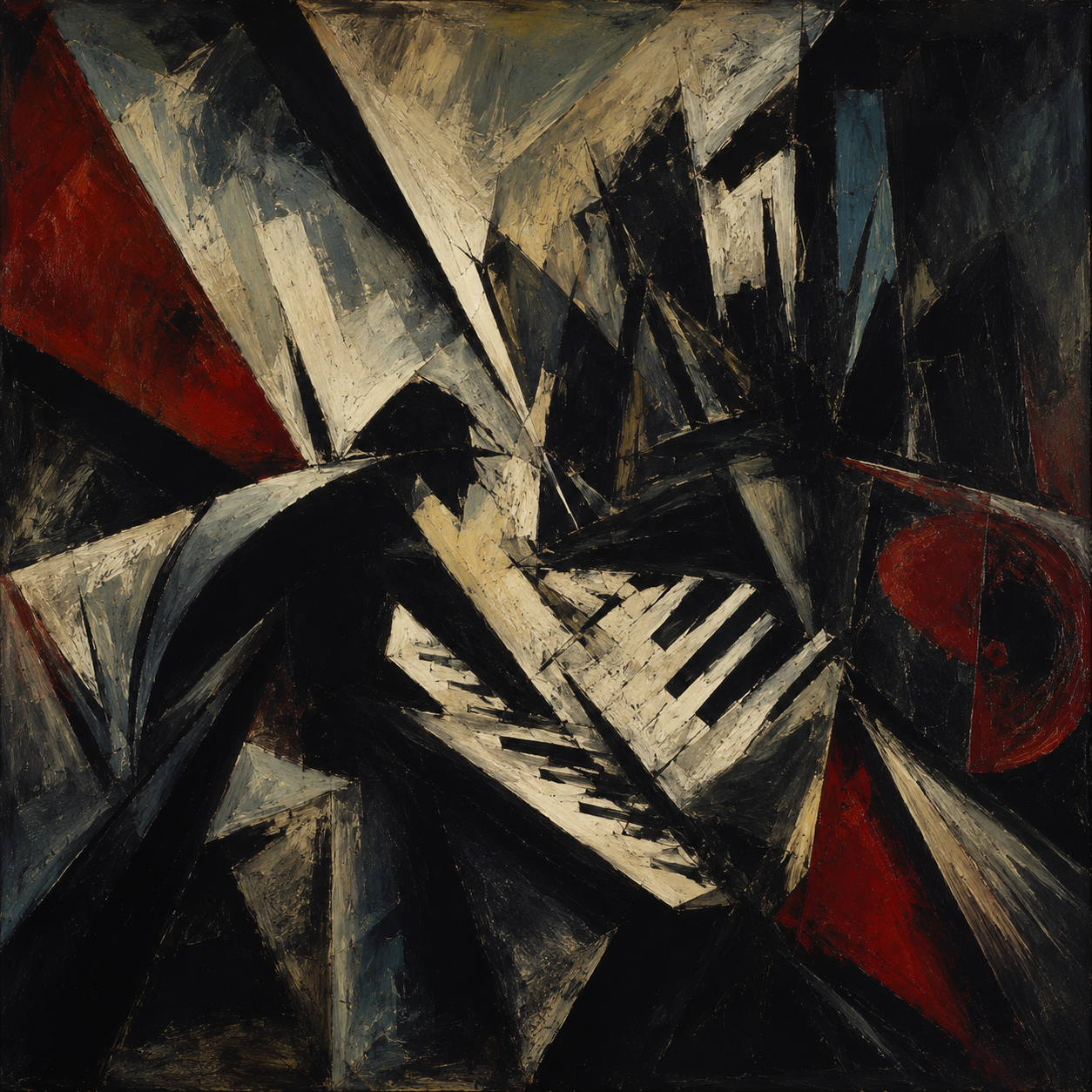
There are concerts remembered for their perfection: Horowitz returning to Moscow’s Great Hall of the Conservatory (1986), as though the piano had waited more than sixty years to welcome him home; Rostropovich performing Bach beside the Berlin Wall (1989), while history itself was changing key; or Leonard Bernstein conducting Beethoven’s Ninth at Berlin’s Schauspielhaus (1989), convinced that, for once, music could outrun politics. These are those rare occasions when every note falls into place with the inevitability of a law of nature, and every silence seems to have been negotiated with eternity. The Köln Concert, by contrast, belongs to a far more fascinating category: works that survive because of disaster.
Keith Jarrett arrived at the opera house exhausted, suffering from back pain after a journey that would have broken anyone with a shred of common sense, only to discover that the piano prepared for him was little more than a piece of furniture with musical ambitions and delusions of grandeur: metallic trebles, anemic basses, and pedals with a legal personality of their own. In short, the instrument had decided to take the night off. Any reasonable pianist would have demanded another piano—or canceled the performance altogether. Jarrett sat down and played. Some people simply regard catastrophe not as an obstacle, but as a perfectly reasonable place to begin.
What is extraordinary is not the improvisation—that was his native language, and the world had applauded him for it often enough—but his almost clinical obstinacy. Forced to work around the instrument’s limitations, he avoided the registers that sounded worst, built repetitive patterns with the concentration of someone trying to hold back a flood with his bare hands, and transformed scarcity into architecture, deprivation into style. Sometimes great revolutions are born from a mechanical failure. At other times, they begin with a technician delivering the wrong piano and going home without the faintest suspicion that he had just altered musical history.
Listening to it today produces a strangely irritating effect. It sounds inevitable, as though the music had always existed, quietly waiting in some forgotten drawer for the right moment to reveal itself. Yet every measure was being invented on the spot—without a score, without a safety net, and with no guarantee that the next phrase would work. Just one man negotiating in real time with an instrument that seemed to have been tuned by a pessimistic civil servant on the last day of his career, when even failure no longer deserved enthusiasm.
Its success was so overwhelming that it became, with the elegant sense of justice only the universe possesses, Jarrett’s private curse. The best-selling solo piano album in history also became the longest shadow of his career—that peculiar kind of immortality that feels suspiciously like a life sentence. Some artists spend their entire lives searching for a masterpiece. Jarrett spent the rest of his time, with little success, trying to convince the world that he had written something else. The world, grateful as ever, kept refusing to listen.
There is, moreover, one deliciously ironic detail that history has preserved with particular affection. The concert’s promoter was an eighteen-year-old student, Vera Brandes, who accomplished something far more difficult than organizing a recital: persuading everyone that the recital could still happen. Had she accepted the first “This is impossible,” which arrived early and with remarkable conviction, the recording would never have existed. The history of music depends, far more often than we care to admit, on stubborn people and disastrous logistics.
The Köln Concert is the definitive proof that inspiration does not always descend from Olympus under ideal conditions. Sometimes it arrives sleep-deprived, with a ruined back, a piano that has already surrendered, and a contract that no longer allows excuses. The rest is jazz. Or, if one prefers a less romantic definition, the rare art of turning a logistical mistake into an immortal masterpiece. After all, perfection seldom makes history; accidents, on the other hand, have been writing it with admirable punctuality for centuries.


