
Rereading Quevedo
The strong gust shoved him toward the sea. Although he reacted immediately with a movement of his shoulders, shaking out his hands, planting his heels firmly to make sure no dizziness would come over him, avoiding leaning against the chain that from lamppost to lamppost adorned the warning against possible falls into the water, at the slightest distance from the jagged coral rock.
Every dawn, he walked as fast as his atrial fibrillation and the stubborn calendar allowed him, with the sea of Aventura Bay to his right—to the South—today scarcely ruffled into small crests. And suddenly another damp gust from the southeast came with unusual force, broke the cadence of his early-morning walk as if it were the alarm from a wind-up clock, the siren of an ambulance, the horn of one of the trains that skirted Biscayne Boulevard.
But the strange gust of air opened onto far stronger oddities. The astonishments immediately leaped out… One after another. With hardly any pauses to take them in. Suddenly, there disappeared the envy that every morning was stirred in him by the passersby who jogged without crushing effort, the shortness of breath that came over him if by chance it occurred to him to walk a little faster. He realized he was not jogging but running, almost like Alan Sillitoe—the nickname adopted by the friend from his Point East condominium—who had shown him a blurry black-and-white video on his phone from when he won a silver medal as a long-distance runner in the Nottingham of his youth.
The persistent cramp on his left side—an inheritance from the stroke—had disappeared. The heaviness in his right forearm after the infiltration for bursitis had disappeared. And so had each ailment, the slight ones and the grave ones, the occasional and the permanent… He felt as he had once in Varadero, when he jogged along the sand from the guano bar-ranchón of the Hotel Kawama to the Hotel Internacional. So young that he suspected such happiness was abnormal.
He feared he had only two or three, perhaps four minutes left before the bath of sweat dragged him away. He feared correctly. There would be, if anything, twenty seconds before the Prussian-blue curtain fell, before the memories were crushed, ground down. He dismissed the memories of the heart as too affectionate. He chose, without thinking, random fragments of his work: the conversations with Günter Grass before meeting him in Lübeck, imagined through the airplane window that carried him for the first time to Frankfurt, on his first trip to Europe; the unforgettable dreams of Elias Canetti when he fell asleep on that train to Vienna from Zurich, after having been in his apartment near the university; George Santayana’s The Last Puritan reread in Havana, Puebla, Phoenix, Boston, Miami; the verses to the tokonoma that his compadre read to him one night in the living room of his house, while they drank that Russian tea from the Urals, which he had christened Dragon’s Mustache so that its flavor would be transformed into metaphor, would conjure away everyday ostracisms, the bitter disappointments.
With the last memory, he became more aware that the sand was slipping through his fingers, coinciding with the damp, almost pasty dawn of gray clouds toward the East. In the opposite direction from the city of Hialeah, where Cubanness was debated among guayaberas, shorts, yuca with mojo, hot dogs, and maracas, while the McDonald’s on 36th increased its hamburger sales, and around the corner, La Venduta Matancera closed its veiled glass door because barely one or another young person came in, perhaps with little time on this side.
Could it be true that the level of the seas will rise until it covers the docks at the edge of the swell? He wondered, to divert his concern away from fleeing another tearing somewhere inside, where it is decided whether you remain ruminating or leap backward, like the trapeze artists of Cirque du Soleil he had seen the previous year in Fort Lauderdale.
He hesitated little between a few moments of his life or saying to himself, in a murmur, the sonnet by Quevedo that for more than half a century he had managed to memorize, perhaps while preparing a class. Perhaps because he would also not forget that they left Mexico City for Nuevo Laredo on September 8, to cross on the 9th—the Day of Our Lady of Charity of El Cobre, patroness of Cuba—the border toward Laredo… The same day on which the poet died in Villanueva de los Infantes, near Madrid, from the market, he was honored with his broadsheet verses.
He smiled. He knew no better epitaph for his wanderings. He smiled again for a few more seconds before reciting to himself:
Yesterday was a dream; tomorrow shall be earth.
A little before, nothing; and a little after, smoke!
And destiny, ambitions, and I presume
Scarcely a point within the circle that encloses me!
Brief combat of importunate war,
In my defense, I am my greatest danger;
And while with my weapons I consume myself,
My body shelters me less than it buries me.
It is no longer yesterday; tomorrow has not arrived;
Today passes and is and was, with movement
That carries me headlong toward death.
Spades are the hour and the moment
that, as day laborers of my sorrow and my care,
Dig my monument in my living room.
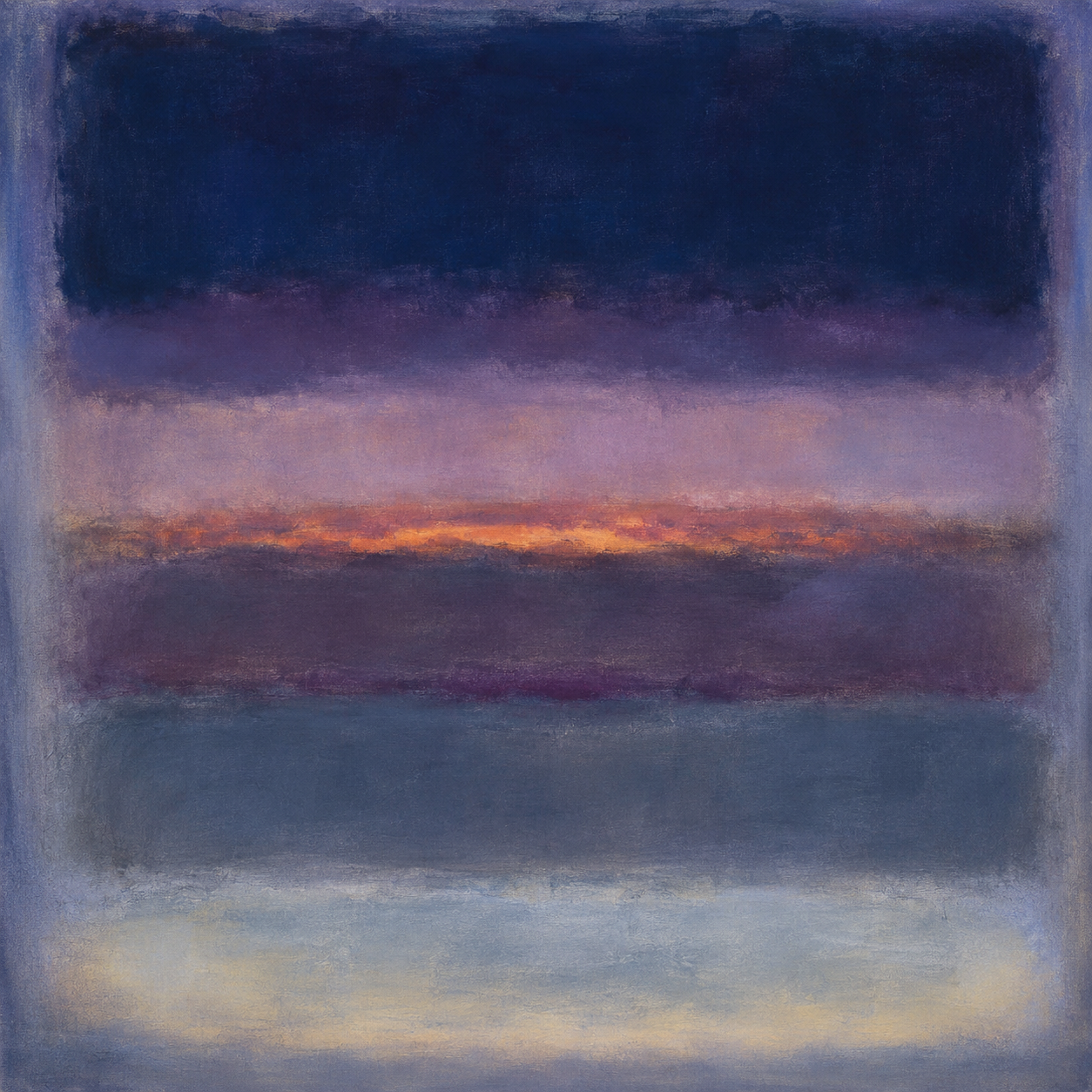
But after the sonnet, he had the surprise that the Prussian-blue curtain was drawing back toward the sides of his eyes, opening onto the violet sea of dawn while his breathing settled, more or less coupled to his old age. He began to walk again calmly, at his everyday pace.
He clicked his tongue and smiled while supposing that the poet from Madrid had been mocking his apprehensions, postponing the precipice, keeping the spades until further notice.


