
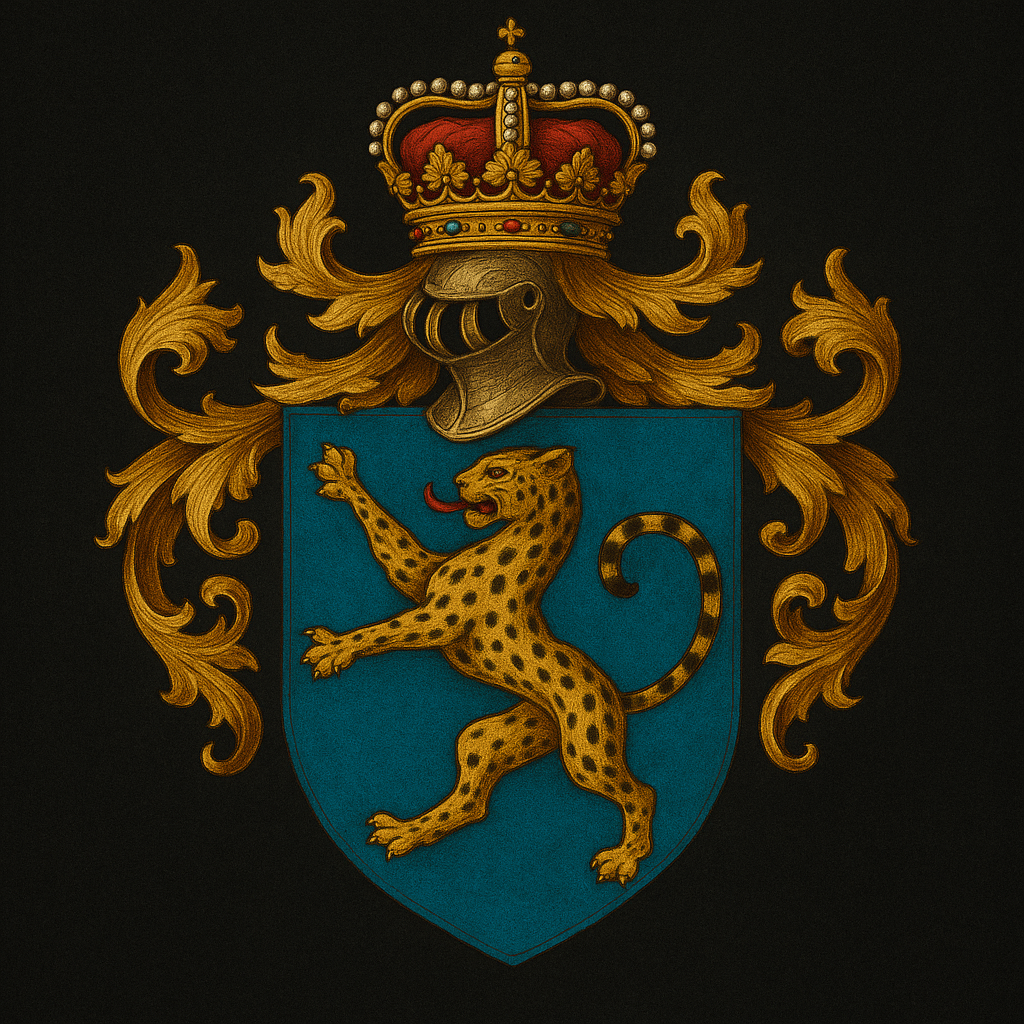
In Tomasi di Lampedusa’s novel, the Sicilian aristocracy dies with an elegance worthy of self-aware decadence. Its decline is a minor symphony, slow-paced, charged with a beauty that knows it is terminal. The Prince of Salina, that weary feline, cannot resist modernity: he contemplates it, tolerates it with the calm contempt of one who knows that his time has passed. It is a dance with death, performed with waltz steps and resignation. None of this survives in the Netflix adaptation.
The series The Leopard (2025) does not capture the decadence, it only (barely) illustrates it. It is a montage of beautiful images, a parade of polished palaces and costumes made possible by a large budget. Kim Rossi Stuart, as the Prince, walks through scenes with the gravity of an actor who has understood the words, but barely the original context that inhabits them.
There are remarkable gestures, framing, and a soundtrack; however, the invisible death that runs through every line of the original text is missing. Angelica, played by Deva Cassel (daughter of the divine Monica Bellucci), is only surface. Where there should be ambiguity, desire, a sensuality imbued with opportunism, only a beautiful figure appears, frozen in her poses.
The series, fearful of the slow pace that true melancholy demands, accelerates, cuts, and aestheticizes. Instead of presenting a world that is fading away, it constructs one that never existed.
Historical references slip by like backdrops, not like living forces. The unification of Italy, that tragedy disguised as progress, appears as decorative context. The real tension between the old and the new is absent, leaving only an exhibition of contrasts that do not touch. We are faced with a series that takes pleasure in its own production.
It is best to approach the interiors as one would read a secret autobiography: the novel understands that a class is narrated in its furniture, in the patina of the bronzes and in the dust that sleeps on the moldings. There, each object functions as a domestic vanitas—the stopped clock, the cracked portrait, the ancient fan—and betrays the tired breath of the lineage. In the series, the rooms look like exhibition halls, surfaces without memory, damasks without touch, mirrors that keep no traces. The Prince’s house, which in the book becomes depopulated like a sick body, here becomes a catalog; the wood does not creak, there is no smell of wax, there are no flowers dying in vases. Thus, the microphysics of decadence is lost, that minimal repertoire of signs—a restrained creak, a lamp that forces one to lower one’s voice, velvet that reveals the gravity of gestures—through which history becomes style. And when the iconography of use is erased, what remains is mere props.
The problem is not that The Leopard is a bad series. We can classify it as a good series disguised as great art. The novel was an epitaph written with goldsmithing. The series captures the outline but ignores the spirit of the Letter. And in its eagerness to represent the beauty of what is disappearing, it ends up disappearing the beautiful.
Luchino Visconti, on the other hand, understood the essential. His 1963 adaptation did not attempt to translate the novel, but rather to evoke it through the lens. His camera moves as if dancing with death itself, giving each frame the weight of time running out. Burt Lancaster, an unlikely Prince, manages to embody wounded dignity and class fatigue without needing to emphasize anything. The final ball scene—long, hypnotic, almost funereal—is more faithful to Lampedusa’s spirit than any literal reconstruction. Visconti does not allow himself to aestheticize decadence; on the contrary, he breathes it. And in doing so, he achieves what the Netflix series does not even attempt: to understand that everything must change so that nothing really changes.
A worthy adaptation of Il Gattopardo should understand that the real tragedy, rather than the loss of power, is the awareness that history continues without us. Netflix, on the other hand, has done what it does best: replace memory with aesthetics, depth with speed, art with content.
Perhaps we have no choice but to accept this adaptation with the same spirit with which the Prince of Salina observes the arrival of the new order: without illusions or hopes, but with a kind of elegant resignation. Because if everything must change so that everything can remain the same, then these adaptations, empty and shiny, are also part of that eternal return. And perhaps that too deserves to be contemplated, even if with the melancholy of someone who no longer expects anything.


