
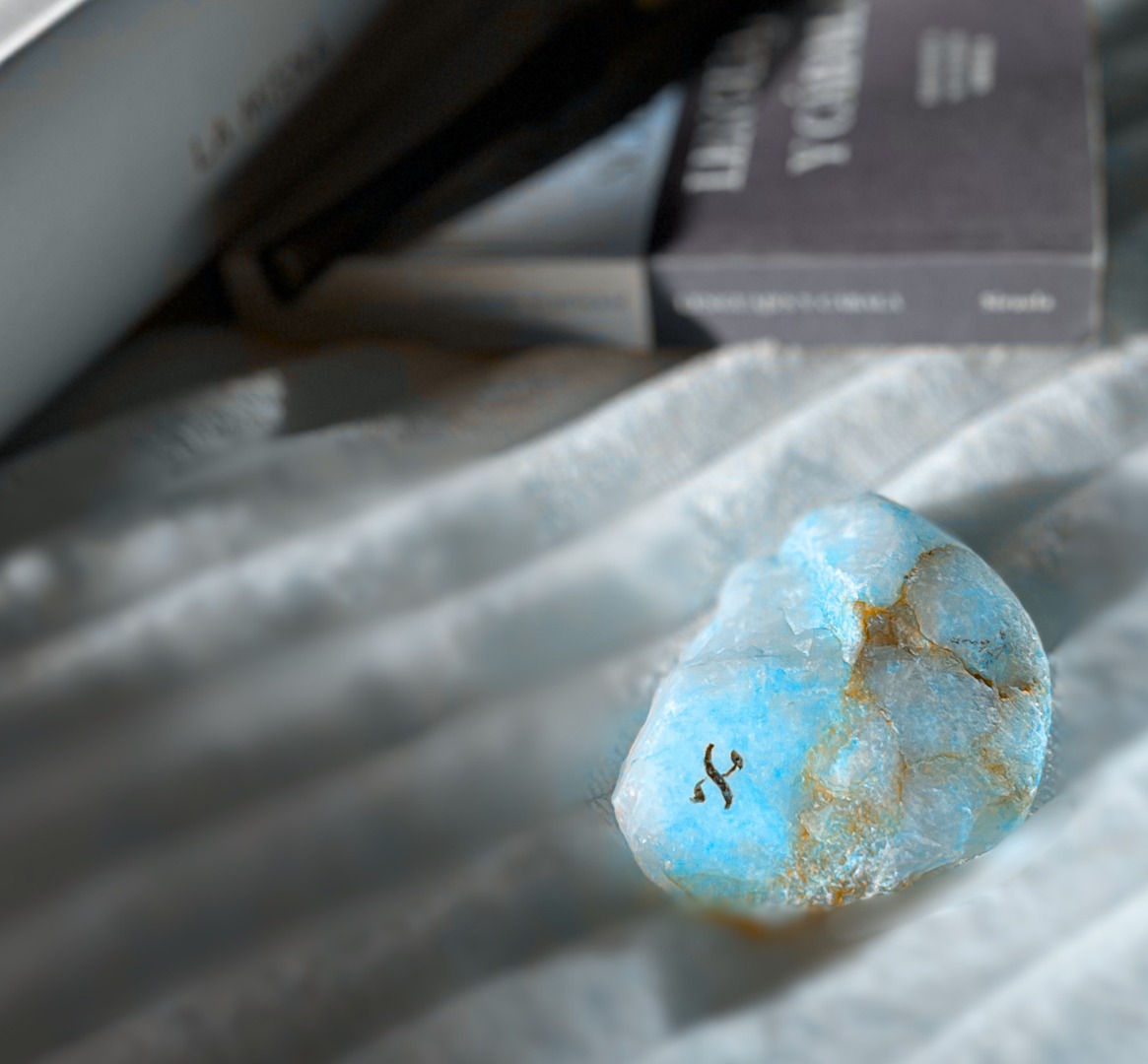
Aleph, beth, gimel. In every generation there are thirty-six hidden righteous ones. If they wished—says the Kabbalah—they could recombine the letters and create a world. Why don’t they finish creating it? Why don’t they reveal themselves? Why doesn’t the messiah arrive? Can one return to paradise? Can one, at least, return to Jerusalem? The Jews have grown accustomed to living with these questions on their backs for several millennia.
Neither religion nor politics has provided satisfactory answers to these questions. The mystic—the Kabbalist, the Hasidic master, the saint—has always tried to reinterpret the problem by returning to the origin of everything, that is, to the center of the Torah. The Torah is a house with many doors, according to the well-known metaphor, whose keys have been misplaced. How can one read correctly in such a situation?
First of all, the Kabbalist works with the same texts as the rabbi. There are not two words of God, but two—many—styles of interpretation. On what are they founded? On the authority of a master and on the tradition that stems from him. The masters of Kabbalah are usually very protective of their teachings. The family of Jaim Vital, the rabbi who gave written form to the doctrine of God’s self-contraction—the tsimtsum—was bribed so that, during one of the old man’s fainting spells, a rival might copy his teachings.
Mysticism is not the religion of everyone, and for that reason the postulates of Kabbalah, although they coexist perfectly with official religion, do not aspire to constitute a separate religion themselves. A small dictionary may help to understand the Kabbalist’s worldview.
YHWH. In the sacred Tetragrammaton and its combinations—the word Adonai, for example—the essence of God is contained. Kabbalah calls that essence En-Sof, the infinite. The abstraction and the impossibility of assimilating this idea are key to understanding why a Jew never pronounces the name of God. More than blasphemy, pronouncing those four letters is a mockery that rebounds upon the human being: how can one speak of what one does not know? How can one name what one does not understand? It is like having a bomb before you and daring to dismantle it without the slightest care or knowledge. For the Kabbalist, the name of God is compressed energy on the verge of exploding.
TSIMTSUM. It did explode once, in fact. In a moment without time—according to the celebrated Kabbalist Isaac Luria—YHWH opened a sphere within Himself, a sphere absolutely empty of God, withdrew, contracted Himself, separated something within Himself in order to create the cosmos there. This separation has something tragic about it: the distance that opens between YHWH and His work—and, of course, between God and man—is immeasurable. Christianity will argue that this separation was so unbearable that God had to incarnate in matter in order to restore the bond between both planes. In that supreme void, the Tree of Life began to emanate from God.
SEPHIROT. There are ten worlds: the sephirot. They are represented as a succession of circles connected by silver lines. Through these cosmic veins passed the light of God and, given the poor quality of the material—created by Himself!—those vessels shattered. Evil in the world proceeds from that error, an error that even precedes the creation of man.

ADAM. At that primordial moment there did not exist the Adam we see in Genesis, but a kind of proto-father called Adam Kadmon, the primordial being. He was nothing more than a golem, an immense and clumsy creature. Adam comes from the Hebrew word for earth, because he was created from dust. It is said that he remained in paradise only twelve hours. In the fourth hour the matter of his body was infused with divine spirit. In the eighth hour “he entered the bed with Eve as two, and they came out as four.” In the twelfth hour he left Eden, after sinning and being punished. Adam did not wish to have further relations with Eve after Cain murdered Abel. It is said that he then lay with she-demons—created on Friday afternoon, like all demons according to Hebrew mythology—and fathered malevolent spirits.
SHEKINAH. The Jewish God is not trinitarian, but He has a consort—Shekinah—and a daughter—the Torah. Shekinah and the Torah often become mere attributes, but there are scholars and archaeologists (I especially recommend Thomas Römer) who have found evidence of the ancient cult of a female deity within Judaism. The obscuring of the Shekinah is such that, in some periods, she became synonymous with the Tree of Death, opposed to the Tree of Life. She is also connected, as mother and exiled princess, with the idea of exile. “In every exile to which Israel went, the Shekinah accompanied it,” says a Talmudic treatise cited by Scholem.
TIKKUN. For every disaster in Jewish history there has been restoration—or, in the worst case, retribution. For the fall of the cosmos there will be an equally supreme restoration, which the Kabbalist calls tikkun. If at the beginning of everything God emptied Himself and separated a part of Himself, at the end everything will return to identity with the divine. For every movement of dispersion there is one of contraction. “The man who acts according to the Law causes the fallen sparks of the Shekinah to return, but also those of his own psychic sphere. He restores his own spiritual figure to its divine perfection” (Scholem).
This is the world contemplated by the Kabbalist: a Tree of Life, a God who empties Himself—the idea will return in Christianity, like so many others—a goddess in exile, a humanity that survives only because there are thirty-six hidden righteous ones, an alphabet that, perhaps pronounced forward, perhaps backward, contains all secrets. Gimel, beth, aleph.


