
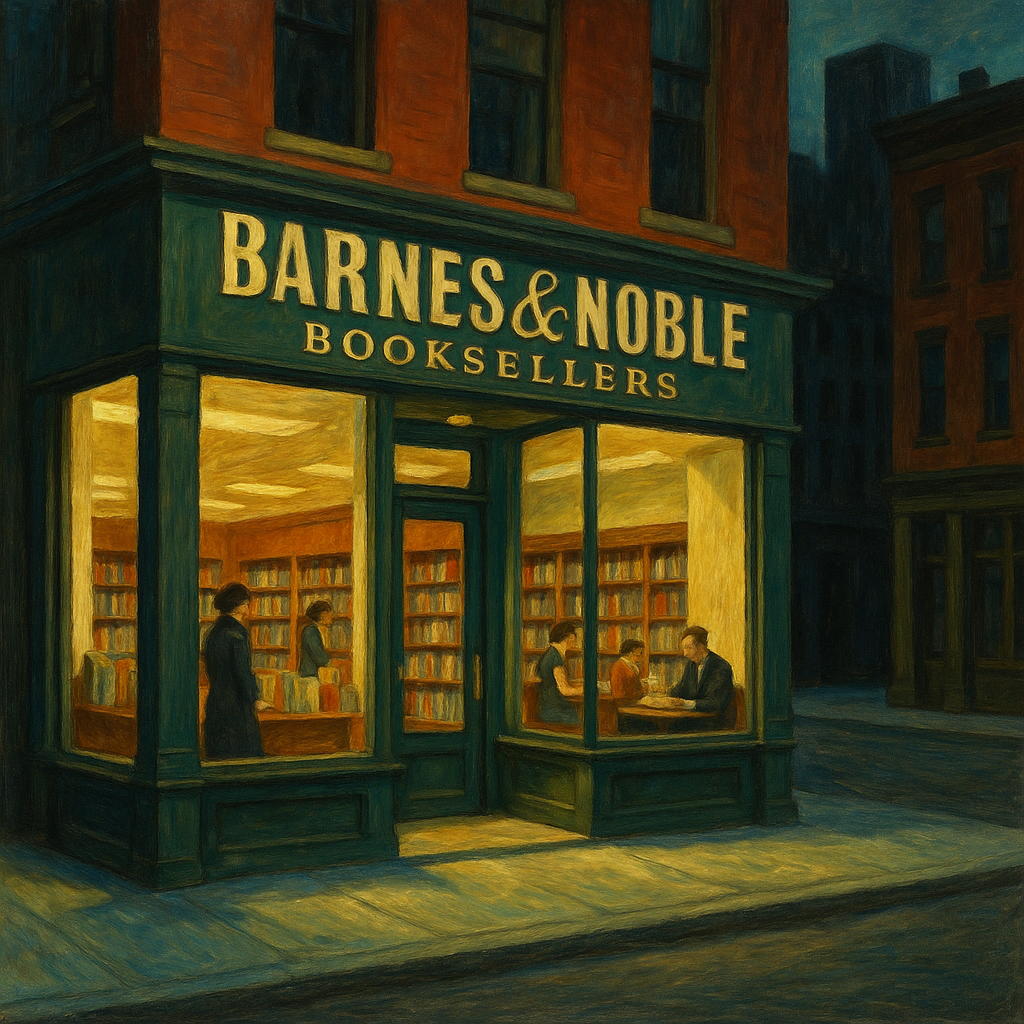
The news feels like a delicious paradox: in Miami—a city of beaches, electronic parties, and endless brunches—Barnes & Noble is opening not one but two new stores. Just when surveys keep repeating, with a funereal tone, that people read less and less. As if someone had decided to open video rental stores in the age of Netflix—but with a mysterious twist: apparently, it works!
In Houston they’ve already reopened with great fanfare, and in other cities—from Bellevue to Naples, from Brentwood to Superior—openings are multiplying as if the chain’s executives had struck oil beneath the bookshelves. The unavoidable question: what do they know that we don’t?
Suspicion: Bookstores as Scenery
Here’s where things get intriguing. What if these new bookstores aren’t really for reading, but for being seen? That is, carefully staged sets for the TikTok generation, where the important thing isn’t devouring Tolstoy but posing with him. A bookstore as a theme park: warm lighting, shelves that feel algorithmically curated, armchairs designed for the perfect selfie.
The phenomenon isn’t new: the hashtag #BookTok moves millions of copies. But what’s striking is that the physical book has mutated into a lifestyle accessory, an object that signals sensitivity and depth in front of the camera. The old tome once leafed through in silence is now held up to a phone to rack up likes.
Is Barnes & Noble aware of this? Probably. Because it’s not just about selling books—it’s about offering a cultural stage where young people can film, tag, and go viral. And if someone ends up reading along the way—great, but not essential.
A Real Revival or Cardboard Nostalgia?
The fascinating part is that even if bookstores function as backdrops, that doesn’t mean they lack power. On the contrary: they become a kind of contemporary cathedral, where the ritual isn’t praying but photographing oneself in a contemplative pose. The question is: could that empty gesture accidentally rekindle the genuine desire to read?
There’s a historical wink here: many cultural fads began as mere ornament before turning into genuine habits. Perhaps today a book is bought to show off on Instagram, and tomorrow—in a fit of digital boredom—someone opens it and discovers that, surprise, reading is enjoyable too.
Cultural Hope?
In this game of suspicions, an almost accidental note of optimism sneaks in. Barnes & Noble may have grasped something crucial: culture enters through staging. If the decor is what attracts, so be it. But every person who crosses those doors might leave with a book under their arm. And every book purchased—even if at first it serves only as an accessory—can turn into a story read, a new conversation, a slow return to habit.
Is this a commercial scheme or a cultural renaissance? Hard to say. What is certain is that, in a country where surveys keep insisting that reading is in decline, opening sixty new bookstores is an almost quixotic act. Or very risky. Or a brilliant gamble.
I understand the objection—what does it matter which it is, the important thing is that two or more new bookstores join the ones already here—and I confess I feel much more comforted by that fact. In the end, perhaps what fascinates us about this phenomenon isn’t whether people will read more or less, but that someone decided to defy the narrative of a reading apocalypse. And did so with real stores, with tables, cafés, and shelves brimming with books.
Whether they become temples of posturing or refuges for true readers matters little: the point is that the book is once again at the center of the stage. Even if only as a prop.


