
A writer has every right to publish two rather short, intense, extremely concentrated texts and then devote himself to the art of photography or pre-Columbian archaeology. I totally disagree with our obsession with assigning tasks to creators.
Jorge Edwards
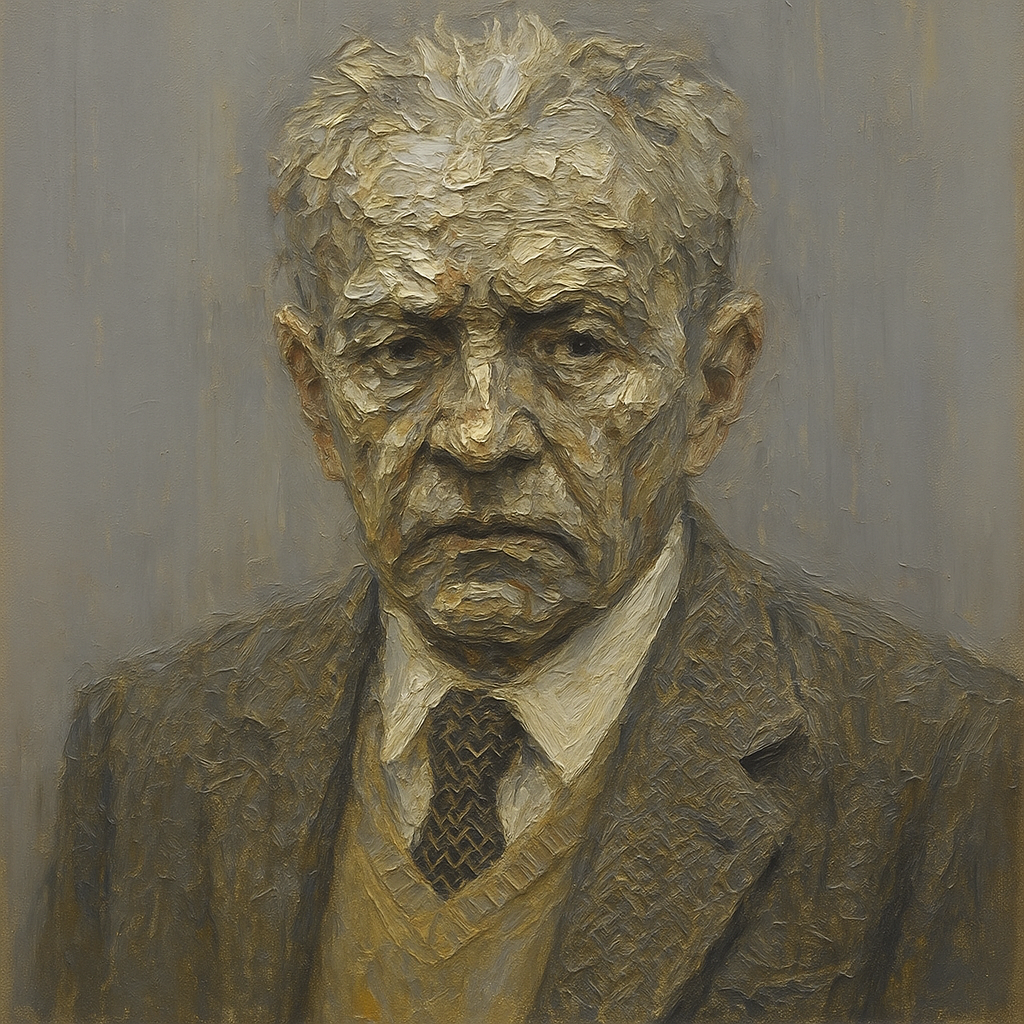
Juan Rulfo (1917-1986) did not have to die to know what success as a writer meant. He would also have felt firsthand all the demands placed on him for having written El llano en llamas (1953) and Pedro Páramo (1955), books that, misunderstood by some when they were published, later became cult objects, at times more mentioned than read. Books admired by renowned figures such as Carlos Fuentes, Octavio Paz, and Jorge Luis Borges.
Born in Sayula, Jalisco, on May 16, 1917, Juan Nepomuceno Carlos Pérez Rulfo Vizcaíno came into the world as the Mexican Revolution was coming to an end. At the same time, Russia was aspiring to social change in the wake of its triumph. Juan Ramón Jiménez published the complete edition of Platero y yo, while Antonio Machado published his Poesías completas.
Also born in 1917 were the German Heinrich Böll, the Chilean poet Gonzalo Rojas, and the British novelist and scientist Arthur Charles Clarke. It was the year that the Uruguayan Enrique Rodó died. Rulfo was orphaned at an early age, first by his father and then by his mother. He lived with his grandmother and then had to settle for the Luis Silva orphanage in the city of Guadalajara.
At the age of seventeen, he began his literary career as a contributor to the publication América. But by 1930, his work had already appeared in the magazine México. These pieces allude to loneliness, when they do not ooze a silence that, skirting sadness, rekindles the writing.
Some time later, after working in various places and even as a “classifier in the Government Archives,” he would combine his vocation as a writer with that of a photographer. Rulfo would be a member of the Goodrich-Euzkadi company from 1946 to 1952, becoming a sort of traveling agent.
During this period, he absorbed as much as he could of rural life: the context that most attracted him because of its inhabitants and their particular stories. Juan Rulfo’s relationship with cinema came after the writing and publication of his two main books. He was already somewhat established and free to collaborate as a screenwriter.
This allowed him, together with his fellow countryman, the writer Juan José Arreola, to join not only Emilio “el Indio” Fernández, but also Roberto Gavaldón and Alberto Isaac. When his second novel, El gallo de oro [1], was made into a film, he was assisted in the adaptation by none other than Carlos Fuentes and Gabriel García Márquez.
Among the awards he received were the National Prize for Literature, awarded by the Mexican federal government in 1970, and the Prince of Asturias Award in Spain in 1983. The Mexican Academy of Language also honored him by electing him as one of its members on July 9, 1976. There he took up seat XXXV on September 25, 1980. Chilean literary critic and journalist Volodia Teitelboim, in his biography Por ahí anda Rulfo (Rulfo is out there), recalls something very interesting about other awards the Mexican could have won:
A commentator, referring to the fact that he was not awarded the Cervantes Prize or the Nobel Prize, stated: “To win them, you need at least eight books.” Wasn’t Pedro Páramo and El llano en llamas enough? Apparently, it is not just a question of quality; quantity also counts at the highest levels [2].
The appealing prologue written by Antonio Benítez for the Casa de las Américas edition of El llano en llamas and Pedro Páramo is also significant. There is a passage that generalizes the aesthetic/stylistic aims of the Mexican writer as a short story writer:
In Rulfo, the localist word does not serve to provide color; it is precisely placed to characterize a language; it balances the dangerously intellectual or poetic phrase and restores the reader to the earth, to the harsh and wild province where the characters move. For the rest, I do not believe that Rulfo set out to write literature of denunciation: reading and rereading his stories, one feels that the main thing for him was to communicate the experiences of his childhood, his obsessions, that piece of Mexico that is Jalisco, the blood on the stone and the dust, the cry to the sun of the corrido, the passions and death [3].
In Pedro Páramo, Rulfo complicates his narrative technique somewhat, while refining a language that is elegant and understandable to native speakers. The narrative is told in the first and third person and, as if that were not enough, alternates between the story of Juan Preciado and that of his father, which are distant and close at the same time. As we follow the journey of Preciado, the seemingly central character, we are given descriptions and events about his father, Pedro Páramo. The novel is like an account of a past that refuses to be forgotten. Those who enter Comala learn about the evolution of a lonely community, but one that is entrenched in whispers, demands, and confessions. As we prepare to listen, Comala lives on through the words of its strange inhabitants. How many characters and situations does Rulfo interweave in the paragraphs? The reader is forced to pause and question the reason for a new beginning if no detail of something new was revealed in the previous paragraph. It is a gathering of whispers between the present and the past.
Juan Rulfo, who said he wrote his novel without the direct influence of William Faulkner—although he read and admired him—but rather that of other American and European writers. As is well known, he was a precursor of the boom due to the atmosphere of the rural setting; the reality of the events, but with fantastic embellishments—“a free fantasy, liberated from the shackles of realism,” as Jorge Edwards put it; the ambiguity of the characters and the alternation of tenses, where the present and the past shape or anticipate, with clues in the plot, what is to come. Hence the advisability of reading Pedro Páramo before the works of Miguel Ángel Asturias, Gabriel García Márquez, and other Latin American authors.
When Spanish radio presenter, journalist, writer, and intellectual Joaquín Soler Serrano interviewed him for the famous program A fondo [4], Rulfo reaffirmed what he had previously clarified about the historic town of Comala, which television and cinema sought but failed to find in keeping with the narrative reference. Rulfo makes this clear by focusing on his literary children: “So these characters are engraved in my mind, and I’ve had to recreate them, not paint them as they were, but bring them back to life in some way, imagining them as I would have liked them to be… So the creative process I follow in these things is not really taking things from reality, but imagining them. The author, the writer, must be allowed the world of dreams, since he cannot take the world of reality.”
Rulfo traced paths of tangled humanity. There were not many for someone who did not fulfill all his literary promises. From a young age, he knew that enthusiasm for a work and a name are fueled by the reader’s imagination. But first, it is undoubtedly a symptom of complacency, the hope of those who perhaps want more than they have already given, without too many changes or variations. He was aware of all this: posterity can be earned without repeating oneself over and over again. He was not interested in success and always wanted to be left alone. But can one expect peace and quiet after writing El llano en llamas and, above all, Pedro Páramo?
When this novel was published, he left the invitation open. Not just any invitation, but a frequent and tempting one, related to the journey to the town of Comala, which he reinvented in literature with the firm intention, why not, of settling there forever on January 7, 1986. There, Juan Rulfo awaits his bravest readers.
[1] Written between 1956 and 1958, although published in 1980.
[2] Volodia Teitelboim: Ed.cit., p.191.
[3] Juan Rulfo: El llano en llamas. Pedro Páramo. Casa de Las Américas, Havana, Cuba, pp. XII-XIII, 1968.
[4] Interview program directed and presented by journalist Joaquín Soler Serrano (1919-2000). It was broadcast on Spanish public television (TVE) between 1976 and 1981.


