
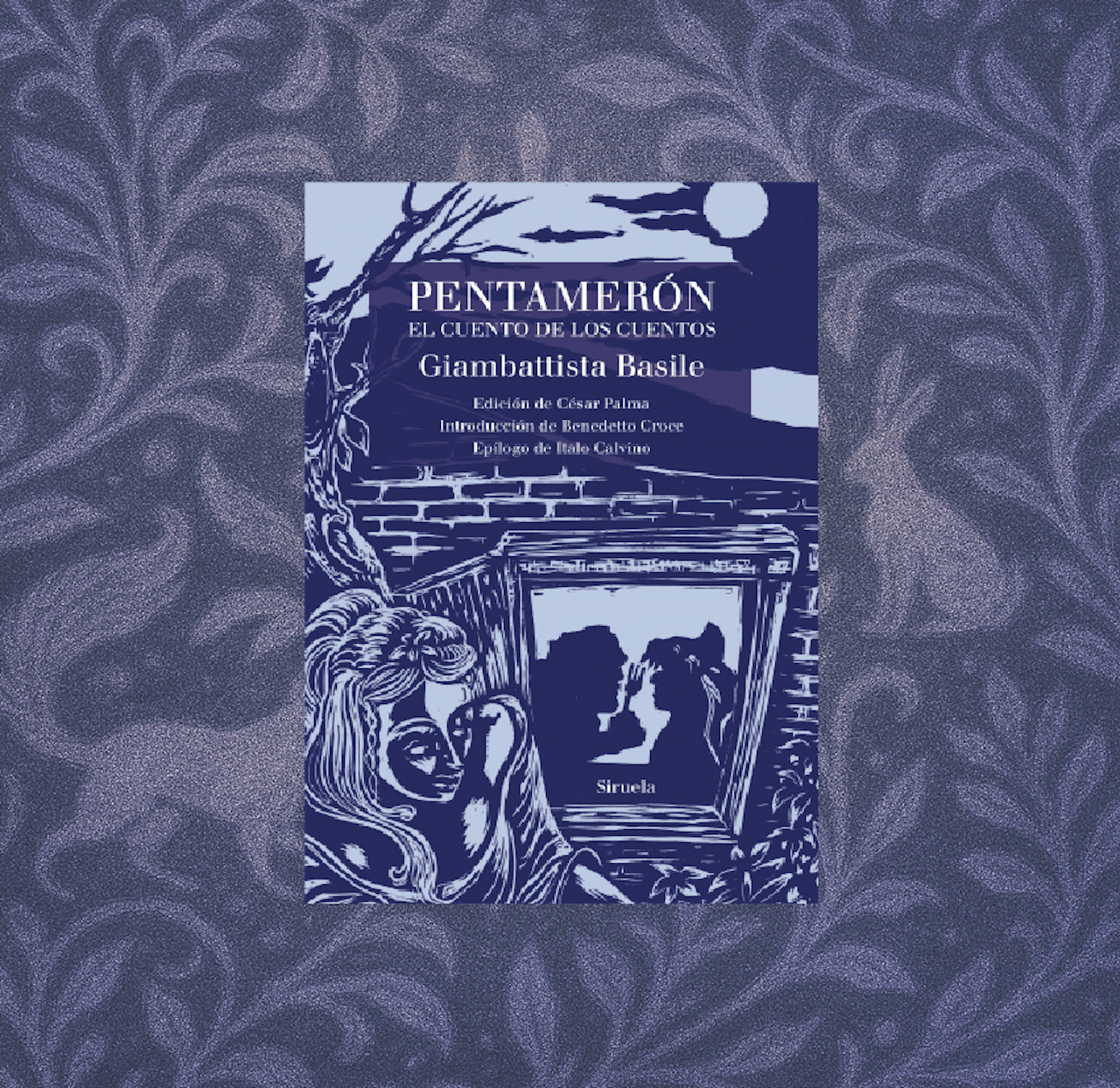
Lo cunto de li cunti overo lo trattenemiento de peccerille —known in tradition as the Pentamerón— is a work that, beyond its generic classification as a collection of folk tales, demands to be read as a major piece of European Baroque literature. Published posthumously between 1634 and 1636 in Naples, under the anagrammatic pseudonym Gian Alesio Abbattutis, this work by Giambattista Basile (ca. 1570-1632) does not belong to the field of narrative ethnography or modern compilatory logic, but rather to an aesthetic of form that dialogues with both erudite and oral models, reconfiguring them from a radical formal sensibility.
The use of the Neapolitan dialect—far from being a gesture of folkloric authenticity—responds to a rhetorical operation, where oral material is transformed into an expressive laboratory. As authors such as Girolamo Bargagli did in I trattenimenti or, to a certain extent, Lope de Vega in his Novelas a Marcia Leonarda, Basile collects disparate narrative materials and reconfigures them within a textual architecture of artifice and excess. The narrative framework, inherited from the Decameron, is folded here into a digressive and discontinuous logic, more akin to the rhizomatic logic of popular memory than to the linear progression of the moralizing tale.
In this sense, the Pentamerone is not an anthology of stories with morals, but a device where form prevails over content, where the proliferation of comparisons, images, hyperbolic turns, and ornamental figures—so often highlighted by Benedetto Croce in his aesthetic reading of the work—turn the narrative into an exercise in stylistic invention rather than a vehicle for values.
The literature of this period, as understood by Basile’s contemporaries—think of Marino’s poetry or Emanuele Tesauro’s conceptual treatises—is defined by formal exuberance, meaningful excess, and metaphor as a machine of thought. Basile follows this line, making the short story not a minor form but a field of expressive experimentation, where the grotesque and the elevated, the archaic and the courtly coexist without hierarchy.
Basile’s operation fuses registers and sources in a narrative alchemy that subverts any pretension of purity: what interests him is not to fix versions but to produce effects. In the face of the moral purges of the 19th century (Grimm, Perrault, and later Jacobs), his work appears as an art of impurity, where the fragmentary becomes the norm. Thus, his prose is not subject to classical clarity or the functionality of the exemplary tale.
In Basile’s hands, the short story is emancipated from the message and becomes an open, contaminated, mutable form. It is no coincidence that many of the narrative structures in the Pentamerone escape the logic of closure: the tale expands into digressions, mutates in the use of proverbs, sayings, and ritual formulas, and generates an effect of semantic instability that refers more to the rhetoric of the unfinished than to a closed order.
Concrete examples of this aesthetic can be found in tales such as “La gatta Cenerentola,” an early and deeply ambiguous version of “Cinderella,” where the heroine’s rise is not without betrayal, incest, and violent punishment; “Lo Mercante,” which combines the figure of the ogre with elements from the “Beauty and the Beast” cycle, but does so through a disjointed narrative, where the grotesque goes way beyond the fairy tale framework; or La vecchia scorticata, in which two old women try to seduce a king through disguises and spells, until one of them, rejuvenated by magic, becomes the king’s wife, only to be avenged by her sister in a final twist that subverts expectations of redemption.
These tales do not point to a clear lesson, but rather to a poetics of transfiguration, where the monstrous and the sublime touch each other. The extreme stylization, sustained by a lively language and images of strong symbolic density, turns each story into a rhythmic score, a narrative arabesque whose purpose is not to illustrate, but to overwhelm. In this gesture, Basile reveals himself as one of the great architects of the European narrative imagination, and his Pentamerone as a key text for rethinking the relationship between oral tradition and artistic writing in the seventeenth century.


