
In the Sefer ha-Bahir, the Book of Clarity, a rabbi asks: “Where was the Garden of Eden?” Someone, we are not told who, answers: “On earth.” Kafka would have disagreed with that answer, identical to the one in the 1987 song: heaven is a place on earth. Kafka’s friends believed that the writer was destined to become the renovator of Judaism, the quintessential Kabbalist, or at least the absolute heretic.
For Kafka, the Fall—the expulsion of Adam and Eve from the garden—is an event that repeats itself permanently. We were expelled in them and with them, and in that sense sin is original, but also personal. For Kafka, sin is impatience, not disobedience. Everything derives from impatience, the “premature interruption of the methodical,” an incapacity for systematic order.
Another sin—negligence—explains why we do not return to paradise, a place that, according to the letter Kafka wrote to Felice Bauer in 1916, is now possessed by a terrible silence. Scholem was fascinated by aphorism number 30, “The good is in a certain sense disconsolate,” because it placed the reader face to face with our impossibility of living in paradise. Kafka, in fact, crossed out this aphorism on the slip of paper dated November 21, 1917, where he had written it.
Why are we incapable of returning to paradise? There is another question that makes the return difficult. “Paradise was intended to serve us,” Kafka writes in 1918. “Our destiny underwent a change; whether this also happened to the destiny of paradise is not said.” In the Torah it is said that at the entrance to paradise there is a cherub with a flaming sword preventing all return, but it is not said what he is guarding. A ruin? A place of rest? A theological abstraction?
Utopia. That is perhaps what the cherub is guarding. But since we know that returning to paradise is impossible, we try to reincarnate it in history. In a certain way, the impulse is similar to the desire to create the golem. Made in the image of a universal creator, man wants to create. If we cannot manufacture life, we create an artifact. If we cannot return to utopia, we recreate one.
The historical result had, by necessity, to be totalitarian and aberrant. It is communism—and perhaps any fantasy of social justice. Jung, accustomed to reading alchemy and Kabbalah, understood that, at bottom, the longing for communism is neither political nor economic; it is theological.
“The Communist world,” he wrote, “has a great myth—which we call illusion, in the vain hope that our superior judgment will make it disappear. It is the archetypal dream, consecrated by time, of a Golden Age or paradise, where everything is provided in abundance for everyone and a great, just, and wise leader governs the kindergarten of humanity. This powerful archetype, in its infantile form, has taken hold of them, but it will never disappear from the world with a mere glance from our superior point of view. We even sustain it with our own infantilism, because our Western civilization is also held fast by that mythology.”
And also: “Unconsciously, we cherish the same prejudices, hopes, and longings. We too believe in the happy state, universal peace, equality among men, their eternal human rights, justice, truth—and, let us not say it too loudly, in the Kingdom of God on earth.”
Jung wrote this in Man and His Symbols, published posthumously in 1964, during the Khrushchev era. Western writers were in full infatuation with the Soviet Union, and only within the limits of the communist Eden—exactly at its limits, in Kabbalistic cities such as Prague—was the idea of the impossible paradise beginning to be understood from a Kafkaesque perspective.
In The Book of Laughter and Forgetting, from 1978, Kundera considers the myth buried—the real life, the real paradise, had long since ended. He speaks of communists as guardians—cherubim!—of a grandiose dream. “Those who were against them had no dream, only a pair of moral principles, worn out and boring. All people have always longed for the idyllic, for that garden where nightingales sing, the territory of harmony.”
It goes without saying what awaits those who challenge that idyll. It goes without saying, as Kafka repeats, that the Fall is permanent and present for each of us. That is why in Kabbalah, and in Judaism in general, exile is a metaphysical condition. We are inevitably marked for exile because, however much one may wish otherwise, blindness is very difficult to sustain.
“Once one has left paradise, it is impossible to return to it,” concludes, philosophically, the rabbi’s cat, the most Kabbalistic of comics. Through wickedness—he killed and swallowed a parrot—Joann Sfar’s cat begins to speak and realizes for the first time the burden of being equal to man.
Unlike the rabbi, the cat accepts that to be human is to be exiled; to be human is to renounce paradise completely until a greater force absorbs him. That force is the good, it is God, but in total identity with Him—what Origen of Alexandria called apokatastasis—when Divinity or Nothingness absorbs us, will we not feel the supreme desolation of which Kafka speaks?
To return to Borges and to his best poem, the tender and horrified gaze of the rabbi contemplating the contradiction of the golem, separated from death only by the letter aleph, is no different from the gaze of the Creator upon Adam, the first golem.
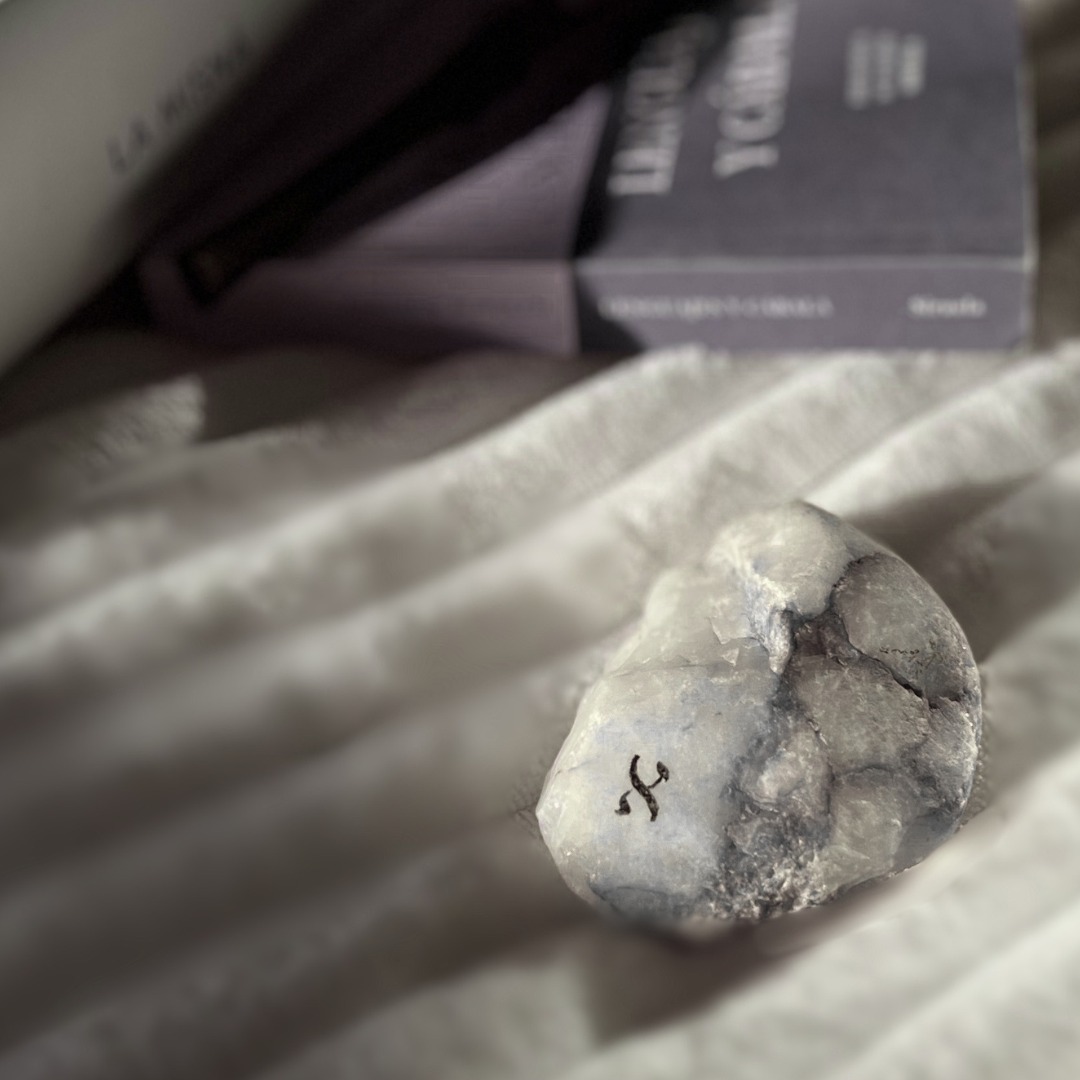
The only paradise that seems to have been given to us is combinatorics, electronics, literature, the tireless permutations of the Torah, which one day we will decipher, like monkeys at the keyboard trying to rewrite Shakespeare by pure chance. The only paradise is gimel, beth, aleph, the letters that must be written on the quartz stone.


