
I read The Bacchae by Euripides while behind me the radio attempts to tally the number of dead in Iran. I am in a small town in Spain, usually quiet, but the uproar of war invades everything. It is enough to turn on the phone and there it is: the immense clamor of those who want to impose their points of view. Buildings collapsing, flights canceled, the markets announce that certain indices fall and oil rises to Olympic heights. Meanwhile, in Thebes there is another conflict no less terrible.
Around the year 408 B.C., a Euripides tormented by the Peloponnesian War left Athens and took refuge at the court of Archelaus I of Macedon. It is not that he was a peaceful king: it was vox populi that he had all the possible heirs of his predecessor Perdiccas II murdered in order to reach the throne, but he was very interested in Hellenizing the customs of his land, and that seemed sufficient guarantee of civility to the playwright. Apparently, the play I am now reading had been written shortly before leaving Attica, between Spartan attacks and responses from Athens and its allies, but he probably completed it in the city of Pella, in the midst of the Macedonian plain. He did not live to see it performed. His son would oversee its premiere in Athens in 406 B.C., a year after the author’s death.
Bacchae is a dark and disenchanted work. The play is a warning about the decline of Athens, and with it the death of an order that was believed to be enduring both in matters of government and in philosophical and artistic expressions.
No sooner does one begin reading the prologue, this time spoken by the god Dionysus, than one is startled by his accusation against Pentheus, king of Thebes: “this combat against the gods” (theomachos). This was, incidentally, the reproach that Aristophanes and many others directed at the author himself, contrasting him with the pious Aeschylus.
The confrontation that follows, with its bloodshed, madness, and social convulsions, bears from the outset the mark of religious war. Nothing new if I turn my attention to the news of these days.
Some scholars of Greek theater have long claimed that the tragic author sought to return to the origins of the genre, to renew the cult of Dionysus as a call to awaken a society whose institutions and even its thinking seemed to be in decline. A reading in these times, illuminated by recent history, appears to contradict that hypothesis. Euripides does not seek the help of a god to renew society; on the contrary, he points to the dissolution of a society imperfect but still endowed with a certain rationality, replaced by unreason and chaos.
Likewise, the use of myth is not for the writer a pretext to exhibit ideal figures; on the contrary, heroes and gods are brought down to the stature of ordinary people: they are calculating, self-interested, resentful; they have little or nothing to do with classical sophrosyne. Cadmus, founder of Thebes and its first king, is in this play an old schemer and opportunist. At the beginning of the piece he advises his grandson and successor Pentheus to worship Dionysus: “Even if he is not a god, as you claim, let him be named as one by you. Tell even a noble lie: that he is the son of Semele, so that it may appear she gave birth to a god, and honor may come upon the whole family.”
As for the seer Tiresias, here he is a character very far from the one we see in Oedipus Rex. Instead of prudence, of concern for the fate of the polis, and of that special sense for sacred mystery he displays in Sophocles’ play, here he simply aligns himself from the very beginning with the cult of the Bacchants and persuades Cadmus to do the same simply because it is convenient, and his response to Pentheus’ arguments has a distinctly sophistic flavor:
When a wise man finds a good hold for his argument, it is not very difficult for him to speak well. But you have a quick-turning tongue, and in your words there is no sense. A bold man, with strength and eloquence, becomes a ruinous citizen when he lacks reason.
Let us not forget that Euripides, in addition to being a friend of Socrates, had been a disciple of several Athenian sophists, and that their rhetorical skill and twisted logic abound in his works. In this case, the chorus has already warned that the new cult is not assimilable to traditional wisdom and therefore cannot be judged with ordinary prudence: “The knowledge of the wise is not wisdom” (Tò sophón ou sophía). A mere antilogy or a full sophism? In any case, it is an invitation to surrender to the irrational.
Both sides in conflict know only how to employ violent methods. Pentheus orders his guards to seize all the Bacchants they find in the mountains—including his mother and his aunts—and imprison them in the public jail. As for the supposed foreigner spreading disorder:
If I manage to seize him under this roof, I will make him cease striking with the thyrsus and shaking his hair, for I will sever his head from his body with a blow! He claims he is the god Dionysus, he who was sewn into the thigh of Zeus, who was consumed in the flashes of lightning along with his mother for having lied about her marriage to Zeus. Is this not the height of madness, and does he not deserve the noose for spreading such blasphemies, whoever this foreigner may be?
The response of the god in disguise goes even further in horror. Arrested under the guise of a foreigner, he allows himself to be led to the palace. Once there, he eludes the soldiers, who believe they are holding him when they have in fact seized a bull, and as a demonstration of his vengeance against the royal house, he not only causes fire to spring from the tomb of Semele but also brings down part of the king’s residence.
Today war has become something similar. All night fire has rained down on Tehran; the theocratic government—or what remains of it—utters prophecies of revenge more terrible than those of Dionysus. The Olympic gods themselves would have wished for weapons such as these: the Trojan War would have lasted a week, and the Homeric poem would scarcely have had a single canto. Lebanon burns, and terror is no longer confined to the arc between Dubai and Cyprus; already there are prophets nearby who proclaim that Spain itself must await the missiles destined for it.
When the augurs of the eastern conflict fall silent, others replace them with a seemingly lesser matter. Night falls over Cuba. There is no electricity, no food, no medicine, no hope. People bang pots at night, shouting in protest. Irritation not only engenders verbal and physical violence, but censorship and repression awaken the irrational side of many, who call for a war like that of the Middle East, with drones and even nuclear missiles. If the war in one part is—supposedly—between a democratic and rational West against an archaic and repressive theocracy, there on the Caribbean island and in neighboring United States many demand the same methods to turn the faltering socialist stronghold into a liberal and capitalist space. Both sides, those who expect a happy ending to history, would do well to revisit Bacchae. After the intoxication of confrontation, after the madness instilled by the son of Semele, the devastation will come into view.
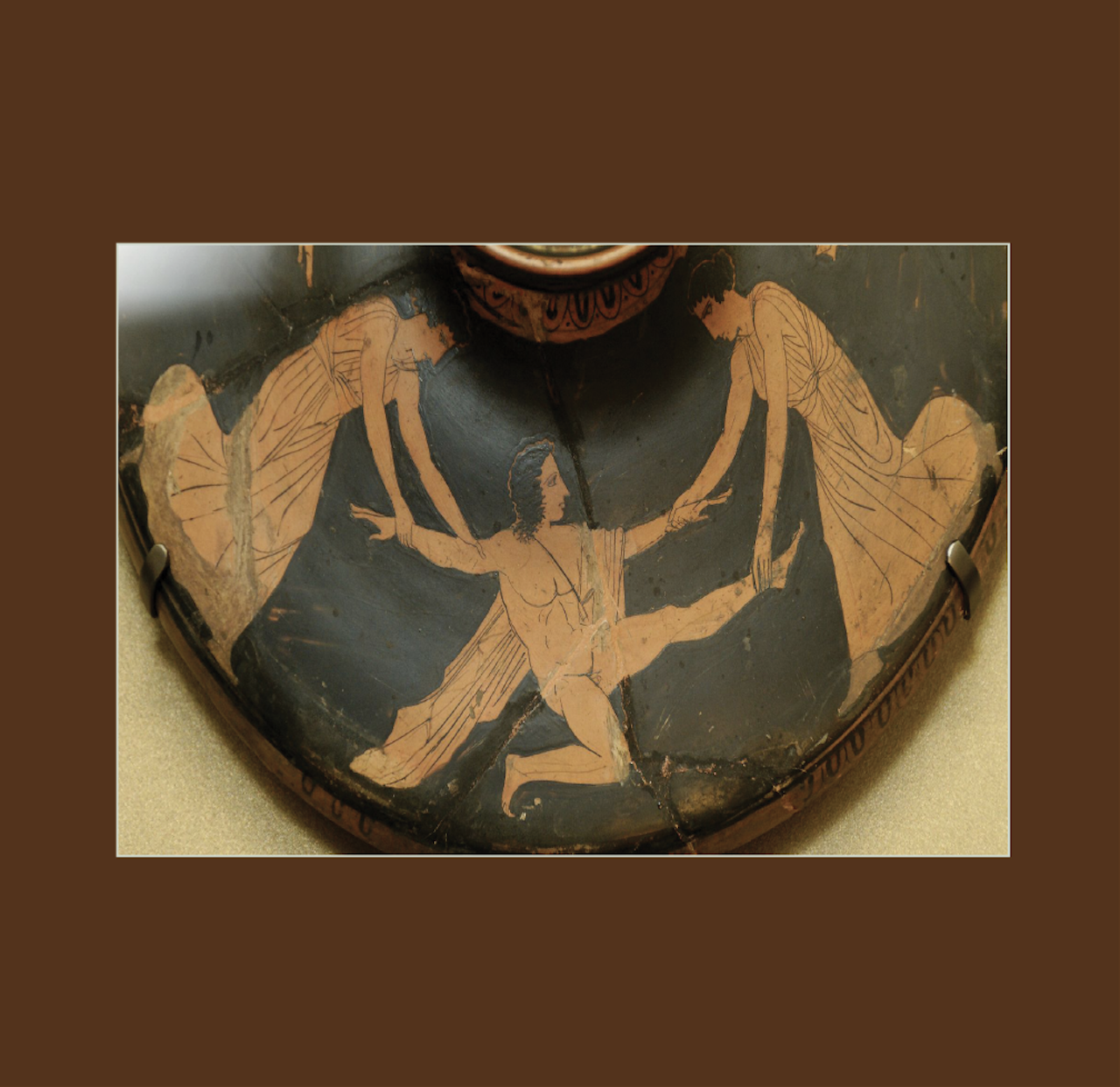
There is Agave, entering the scene with the head of the lion she believes she has hunted and killed. When her father, Cadmus, makes her look upward for a moment—presumably toward the dwelling of the Olympians—her Dionysian frenzy vanishes. What she holds aloft is the head of her son Pentheus. Her jubilation has turned into inconsolable grief. The chorus underscores the scene with its final words:
Many are the forms of the divine, and many things the gods accomplish against expectation. What was awaited did not come to pass, and to the incredible the divinity finds a way. Thus has this drama ended.
Beautiful and sacrilegious words. The intervention of the divine may offer an apparent solution to certain human problems, but not necessarily to human liking.
So persuasive was this final scene for the spectators of its time that it was sometimes filled with a more immediate political meaning. According to Plutarch, during a performance of fragments of this tragedy before the Parthian king Artavasdes, the actor Jason of Tralles played Agave in that pathetic scene while holding, as the head of Pentheus, that of the Roman Crassus, recently killed after the Battle of Carrhae.
The anecdote is very likely false. The death of the wealthy Roman general occurred in 53 B.C., a lustre before the date on which Euripides is supposed to have composed Bacchae, so at the feast of Artavasdes something similar could only have occurred if an earlier tragedy based on the same myth had been recited, or if the act took from a trophy wall the preserved head of Crassus, and Plutarch’s account gives no indication of either possibility. Perhaps it was another hallucination stirred by Dionysus.
Friedrich Nietzsche was not mistaken in insisting on the resilience of these irrational forces. In The Birth of Tragedy he writes:
In the twilight of his life Euripides himself posed most forcefully to his contemporaries, in a myth, the question of the value and meaning of this tendency. Does the Dionysian have the right to exist? Should it not be violently uprooted from Greek soil? Certainly, the poet tells us, if that were possible; but the god Dionysus is too powerful; his most intelligent adversary—as Pentheus in The Bacchae—becomes unsuspectingly the victim of his magic and, transformed by it, runs toward his doom. The judgment of the two old men, Cadmus and Tiresias, seems also to be the judgment of the aged poet: the reflection of the most intelligent individuals, he says, cannot destroy those ancient popular traditions, that eternally propagated veneration of Dionysus; indeed, with regard to such miraculous forces, it is advisable to show at least a diplomatically cautious sympathy; yet it remains always possible that the god may be scandalized by such tepid participation and end by transforming the diplomat—as he does here with Cadmus—into a dragon.
Night falls in Spain. The evening news has shifted its focus: local politicians debate the degree of involvement in that war, which is lasting longer than expected. The prevailing tone is that of Tiresias and Cadmus: let us do what suits us. The ruins of Havana and Tehran begin to resemble each other. Perhaps I should reread The Trojan Women.
Image: Detail of the painting on the lid of an Attic lekanis in the red–figure style: Penteus torn apart by Ino and Agave. Ca. 450–425 B.C. Louvre Museum.


