
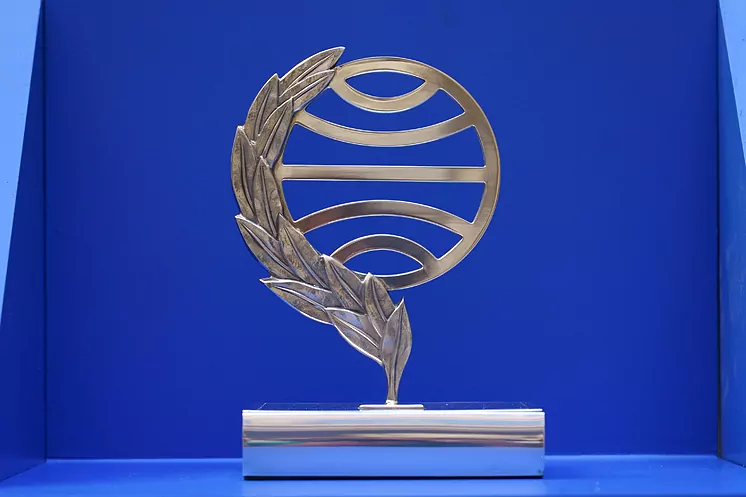
For decades, the Premio Planeta was a kind of literary Olympus with Iberian pretensions: a place where the gods of prose fought for glory and the check. Cela, Vargas Llosa, Matute, Marsé, Pombo, Semprún, Torrente Ballester, the early Muñoz Molina… names that sounded like literature —well-crafted sentences, paragraphs with soul and nerve. Today, that same prize feels like a lost episode of Sálvame Deluxe: a million euros and a novel that wouldn’t survive the distracted reading of a teenager.
The evolution of the Planeta could be studied as a zoological phenomenon. In the fifties and sixties, it rewarded writers. In the eighties, novelists with a certain media flair. In the twenty-first century, hosts, pundits, influencers, and creatures of the Planeta–Atresmedia ecosystem— that universe where books are sold by the kilo and narrative is measured in audience share. The jury, rather than deliberating, seems to follow the algorithm’s advice: “Give the prize to whoever already has a captive audience; the rest doesn’t monetize.”
Let no one be fooled: the Planeta no longer celebrates literature—it celebrates visibility. In the past, winners received a diploma and a touch of posterity; today, they’re assigned to smile on TV shows like El Hormiguero, explaining that they wrote their novel “at dawn, between one program and another.” In this new world, the verb *to write* has become a polite way of saying “to dictate over WhatsApp.”
And literary quality? That, I’m afraid, has become a vintage concept, a collector’s eccentricity. It’s true that the Planeta always had a touch of spectacle, even in its best years. But then, the glitter coexisted with substance; today, it has devoured it completely. What once was a literary gala has turned into an awards show sponsored by nothingness, where literature is the backdrop and the camera the true protagonist.
It’s not just the decline of a prize, but a deeper symptom: we live in times when writing is mistaken for content and the writer for a persona. If the twentieth century believed in the solitary genius, the twenty-first prefers the television author. And the Planeta, faithful mirror of the market, no longer seeks a great novel—it seeks a story easily adaptable into a series. Which is why it’s almost touching that more than thirteen hundred writers have sent in their manuscripts from around the world, secretly hoping to win what was already decided in advance.
There is, however, some consolation in knowing that good novels—like good readers—still exist, even if they don’t win prizes or go viral on TikTok. They hide on quiet shelves, far from the spotlights, where you can still read real stories with genuine literary vocation, no hashtags attached. And one can’t help thinking, with a mix of nostalgia and sarcasm, that if the Premio Planeta had a shred of literary dignity left, it would declare itself void—and broadcast it live on television.


