
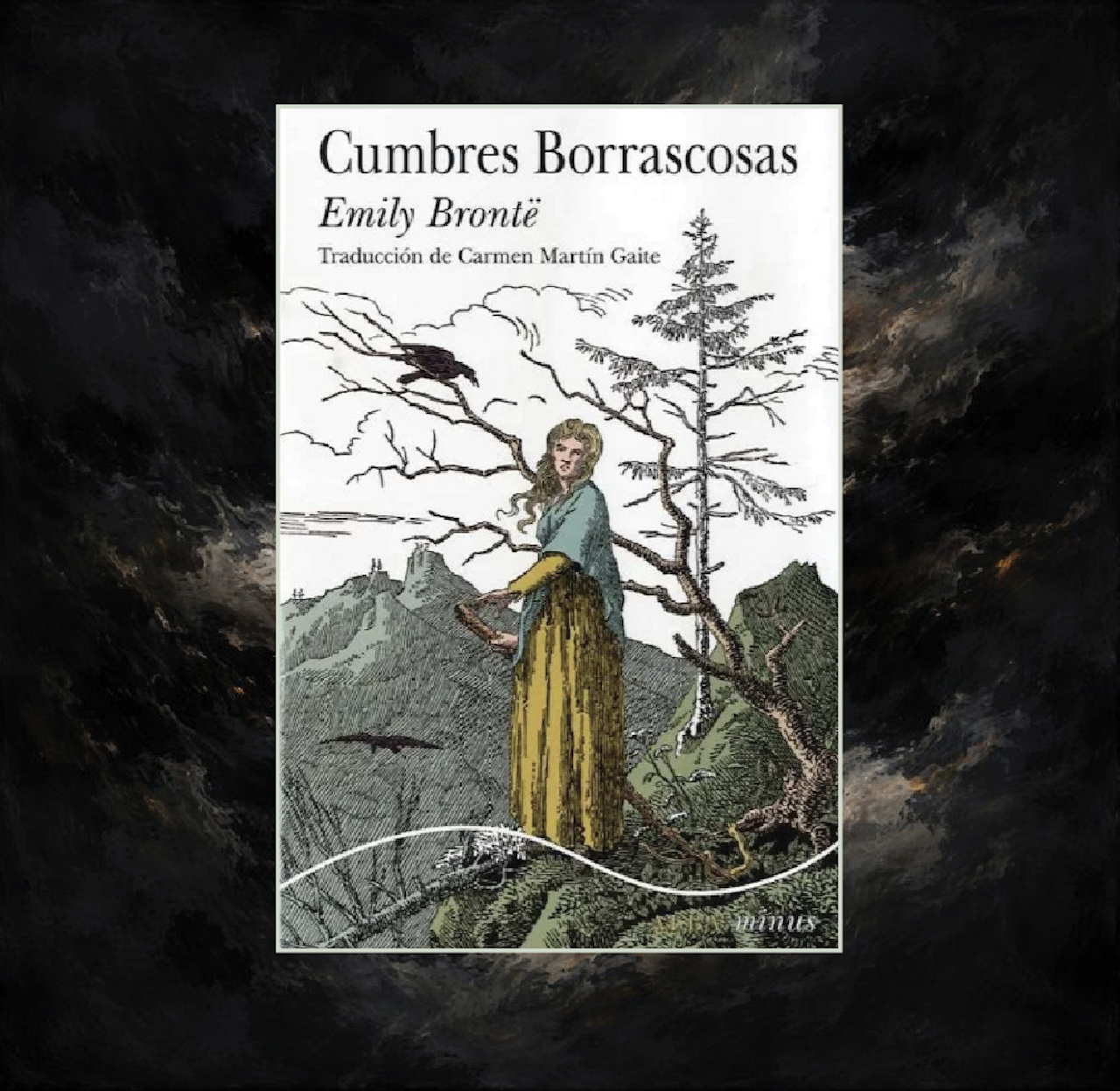
First published in 1847 under the pseudonym Ellis Bell, Wuthering Heights is the only novel by Emily Brontë (1818-1848), a unique figure in 19th-century English literature. From its inception, the work challenged the expectations of the Victorian public with its raw plot and intense passions, eventually becoming one of the most influential novels in world literature. Today, it is recognized not only as a classic of late Romanticism, but also as one of the most complex and ambivalent texts in the Western literary canon.
The Spanish translation by Carmen Martín Gaite (Alba Editorial, 2021) allows the reader to fully perceive the intensity and emotional tension intrinsic to the English original, approaching the language and psychological texture of the text with sensitivity, respecting the drama and poetic pulse that characterizes the work. The narrative unfolds the tragedy and generational web of the Earnshaws and Lintons against the inhospitable backdrop of the Yorkshire moors.
The story chronicles the relationship between Catherine Earnshaw and Heathcliff, whose passion and resentment transcend any conventional model of romantic love to settle into hatred, revenge, and obsession. Heathcliff has become an archetype of the tortured antihero: a character driven by rage, emotional dependence, and the need for retribution, who has subsequently influenced the construction of complex characters in modern and contemporary literature.
Since its publication, Wuthering Heights has left a deep mark on literary history. Its narrative structure, with multiple intertwined voices, and its uncompromising exploration of extreme passions anticipate elements that would be taken up and transformed by later trends. In particular, there is an indirect link to certain interests of early surrealism: the vindication of unconscious forces, the exaltation of the irrational, and the idea of a love that subverts the categories of reason. Although Brontë belongs to nineteenth-century Romanticism, these characteristics anticipate aesthetics that would not be canonized until decades later in European avant-garde movements.
The novel’s relevance lies in its ability to explore the complexity of human relationships beyond social molds. Unlike many romantic novels of its time, it offers no comfort or moral redemption, presenting an emotional palette that ranges from tenderness to cruelty without filters. This psychological intensity and narrative structure that breaks with conventional linearity keep the work alive in contemporary literary debate and global critical reading.


