
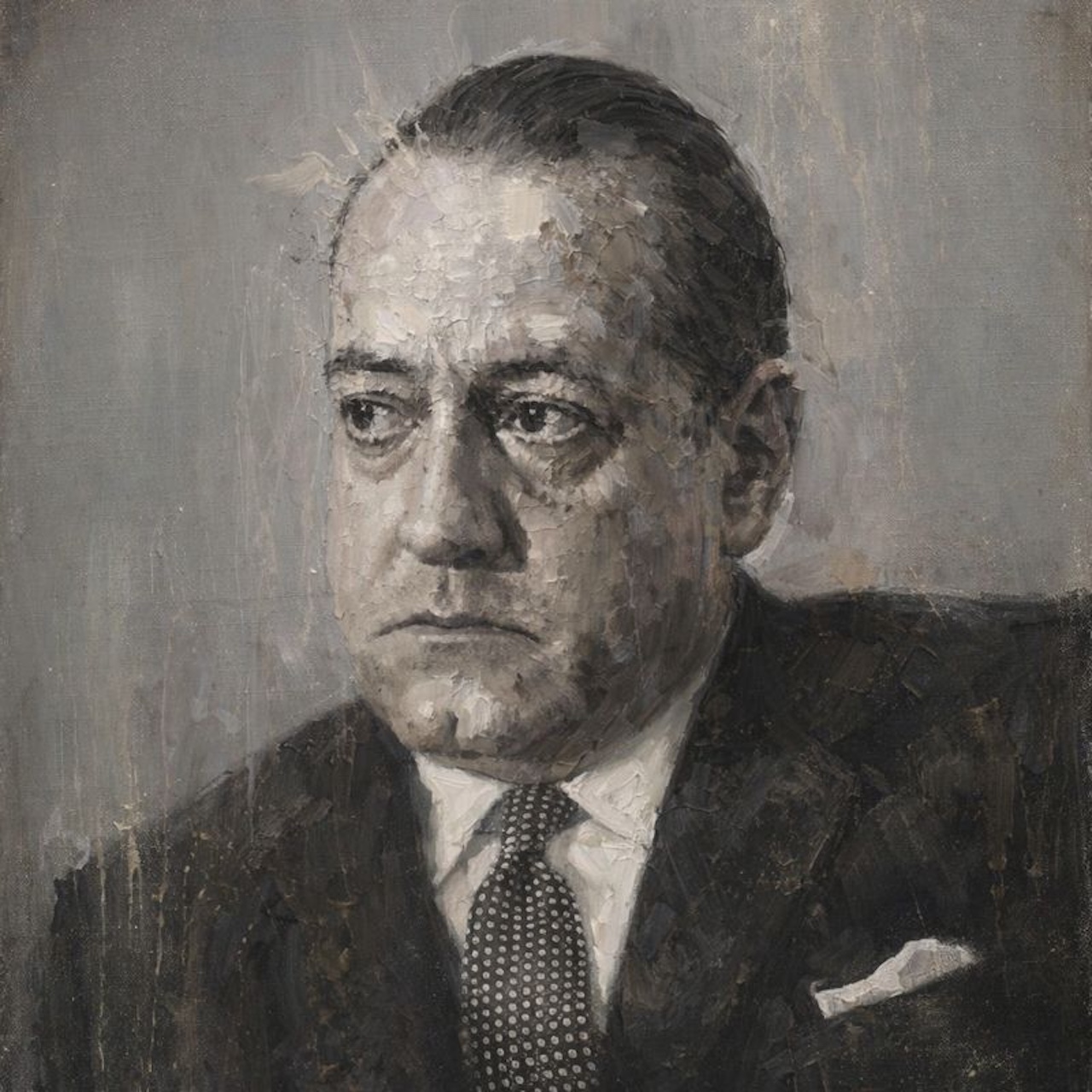
Citario. Derived from the Latin “citāre” (to quote) plus the suffix “-ārium” (repository), similar to “bestiary”. A 21st-century neologism, it emerged among the Spanish-speaking scholars of Bookish & Co., with roots in ancient anthologies and florilegia. “Citario” is related to medieval books of commonplaces (such as Erasmus’s) and 19th-century proto-examples, such as “Familiar Quotations”. This “Citario Carpentier” marks the 121st anniversary of the birth of the novelist who placed the narrative Caribbean in another dimension and knew how to shape characters that refuse to leave the space of literary memory.
His best novels are those that simply set out to give form to the substance of his research, which he weaves together with undeniable skill (The Chase, The Harp and the Shadow, Baroque Concerto, to name just a few, are the most pleasurable to read). One must read his essays and lectures in the books Tientos y diferencias (1964), Literature and Political Consciousness in Latin America (1969), and Reason for Being (1976)—all scrupulously collected in a volume published in Havana, Essays (1984)—in order to enjoy the very best of Carpentier: the lucid expression of his knowledge (which, without being dazzling or fantastic like Lezama’s, is solid, orderly, and always useful), freed from the exhausting and improbable labor of adapting it to novelistic form. Of course, in these essays one must resign oneself to the author’s political juggling acts and, less irritatingly, to the exceedingly frequent reminders of his prestigious friendships, of the sort: “I was speaking of this very thing with Graham Greene,” “as Antonioni recently said to a friend of mine,” “Sergio Eisenstein, who was my friend,” “I was recently discussing this with Michel Leiris” (examples taken from the article “The Social Role of the Novelist”).
César Aira, Dictionary of Latin American Authors (2018)
◾️
Alejo Carpentier, Cuba’s cultural attaché in Paris, had gone to visit Vargas Llosa in London shortly beforehand and, in a restaurant in Hyde Park, had asked him that, upon receiving the prize in Caracas, he make forceful statements in favor of the Revolution and say that he would hand over the prize money to Che Guevara. Vargas Llosa, scandalized, tried to excuse himself by saying that his financial situation was not comfortable and that the prize money would be very helpful to him, whereupon Carpentier replied that it was merely a gesture for public display because “the Revolution will discreetly give it back to you later,” a farce Vargas Llosa refused to play along with.
Xavi Ayén, Those Years of the Boom (2018)
◾️
The news was extraordinary but explicable. The document revealed Carpentier’s multiple and successive inventions of himself as Alejo; why Lydia Cabrera, who knew him well, always called him Alexis; why Alejo nurtured such enduring rancor against Padilla, the man who knew too much, in Cambridge; and why Carpentier had always regarded Havana, like the English, as a port of call—and, still more terrible, why he had behaved so badly toward Cuba all his life: how he had lent himself to every form of knavery in order to serve two masters, communism and Castro, whom he must have regarded as a usurper yet for whom he served as ambassador on many extraordinary occasions, using his prestige to produce discredit. This apparently innocent birth certificate explained more than a few acts of malice.
But chance can abolish foreknowledge. Purely by coincidence, Valentí Puig came by for tea, a Catalan writer who is the London correspondent for Madrid’s ABC. I showed him the fax as a kind of Cuban curiosity. When Puig read Carpentier’s birth inscription and saw that it was genuine, he asked my permission to pass it on to his newspaper. Half amused, half cautious, I granted it. Puig faxed a copy of the document, and ABC published a light and largely inconsequential note. But before that, someone from the newsroom called Lilia Carpentier in Havana. She reacted with accelerated political virulence: “That’s an infamy invented in Miami!” Poor Miami, so far from Cuba and so close to Havana. The acte de naissance from the canton of Vaud could not be farther from Miami or closer to the truth, because it is a Swiss document and therefore neutral and aseptic, like the Red Cross. It originated, in truth, with a civil servant who, if he had ever heard of Alexis Carpentier, would have confused him with Georges Carpentier—not Alejo’s fleeting father, but the Orchid of the Ring, the French heavyweight champion, famous for his physical courage and his Parisian dandy elegance. Very far from Alejo.
Guillermo Cabrera Infante, Lives to Be Read (1998)
◾️
The most notorious fabrication surrounding his life’s itinerary revolved for decades around his place of birth, which Carpentier himself insistently identified as Havana throughout the many interviews, declarations, and autobiographical texts that appear in his bibliography. It is striking that, given how vulnerable such a fact is to verification through various documentary and testimonial sources, he did not even refrain from repeating it at moments when, aware of death’s proximity, he attempted to recompose, adjust, and justify certain aspects of his personal life for the sake of posterity. One should not forget that on April 4, 1978, at the ceremony for the awarding of the Cervantes Prize for Literature, he emphatically repeated it in his acceptance speech before the kings of Spain: “…in Havana, where I was born.” I am certain, however, that by then the novelist who was putting the finishing touches on The Harp and the Shadow (1979) wished to leave us the keys to the secret, sarcastically, by evoking the uncertain origins of Christopher Columbus as a form of personal projection.
Confirmatory evidence of Carpentier’s birth in Lausanne, Switzerland, came to light in 1991, when Eva Fréjaville managed to locate an acte de naissance in the civil registry of the Canton of Vaud, a southwestern region of Romandy, which states that on December 26, 1904, Alexis Carpentier was born there, son of Georges Julien, of French nationality (Marseille, Bouches-du-Rhône), domiciled in Saint-Gilles-les-Bruxelles (Belgium), and of Catherine Blagooblasof. Although Fréjaville wished to keep her role anonymous during her lifetime, she soon passed the document on to her friends Baquero and Cabrera Infante, who undertook to disseminate the scoop around the world.
Wilfredo Cancio Isla, Chronicles of Impatience: The Journalism of Alejo Carpentier (2010)
◾️
On his desk, some open, others with pages dog-eared at an angle and marked with marginal notes—this is how he left some of the last books he had read or consulted: Italian Fascism, by Mirza and Bernstein; Lenin, by Hélène Carrère d’Encausse; The Islam of Spain and of Europe, by Claudio Sánchez Albornoz; The Forgotten Socialism of Yucatán, by Francisco Poli y Montalvo; Smiley’s People, by John le Carré; and the score of Don Giovanni, by Mozart—without forgetting Seven Interpretive Essays on Peruvian Reality, by Mariátegui.
Left on the table is a color photograph in which he poses, smiling, with García Márquez and Carlos Fuentes. A monumental portrait, showing him reading his acceptance speech in the great hall of the Complutense University, presides over the room where he worked every morning.
If I recall correctly, it was a Thursday, and only that Monday he had presided over the opening of Cuban Culture Week at UNESCO, handed an article on Flaubert to Le Nouvel Observateur, finished revising the French translation of The Rite of Spring, and written two pages of his new novel, The Veridical History, based on the life of Paul Lafargue, Cuban by origin and son-in-law of Karl Marx.
An unfinished work, like the memoirs he planned to write “when I’m old,” he would joke, and the libretto of an opera with Luis de Pablo, which will forever remain a project.
(…)
Seeing him stretched out on his bed on Avenue de Ségur was intolerable to me, because I could only imagine his large body seated in his beloved straw rocking chair; I will always see him suddenly rising to show us this or that quotation or image from a book he pulled from his orderly library, only to put it back once the consultation was over.
(…)
The carriage departed in the afternoon. The house emptied of visitors. When they stood him upright in the elevator, wrapped in white plexiglass, a yellow tremor ran through the oil paint of the Saura, Gironella, and Portocarrero canvases in the living room, and people dressed in black murmured and wept throughout all the galleries.
Alejo Carpentier, one of the greatest contemporary writers, minister counselor for Cultural Affairs at the Embassy of Cuba in France, recipient of the Cervantes Prize, lay on April 24, 1980, on his bed, his chest supporting his crossed hands, flanked by four bouquets of flowers.
Alejo was not feeling well. Alejo suddenly found himself sprawled in the middle of the room.
Ramón Chao, Words in the Time of Alejo Carpentier (1985)
◾️
Let us explain ourselves, in case you have forgotten our conversation at home. No one can admire Alejo’s phenomenal style more than I do, or the beauty of books like The Lost Steps or The Age of Enlightenment. Let that be clear. Carpentier is a master, full stop. But when an essay is titled “The New Latin American Novel,” one immediately thinks of any of the best contemporary novelists… except Carpentier. Because Alejo is a marvelous case of literary anachronism, and his Age, whether you like it or not, is a resplendent streamlined Victor Hugo (I already used that image that day because it saves many explanations). You may tell me (Vargas anticipated it last night, since he too greatly admires Alejo) that much of our America is anachronistic in the literary field—that is, that perhaps one can write in different aesthetic times without thereby ceasing to be “new.” Fair enough, but the sooner the time chosen by Carpentier runs its course, the better. Can you reread Salammbô? I, in 1964, find it an effort that exceeds my capacities. What must happen—and then you would be right—is that our Salammbô reaches us a hundred years late, like so many other things. In that sense, Alejo will deserve the gratitude of the future, because with his work one of the possible palettes of American narrative is definitively exhausted, and done so masterfully that those who come afterward will necessarily have to seek other paths. Carpentier has brought to perfection what our Leopoldo Lugones attempted in his own way: to fix American baroque in words. But wasn’t the baroque a style from three centuries ago?
Julio Cortázar, letter to Carlos Fuentes, Paris, August 15, 1964 (The Letters of the Boom, 2023)
◾️
Chapter 23 of that Alejo Carpentier soap opera entitled The Rite of Spring (vol. VII of his Complete Works) begins in the period during the Second World War when the perfidious North Americans pretended to be sound Stalinists. Nowadays, decadent crustaceans such as José de la Colina and Gerardo Deniz revisit that historical juncture with the help of very old issues of Reader’s Digest; they smile and, as is only natural, glean (sic) nothing from History but the trivial. By contrast…
By contrast, Don Alejo, with a single masterful stroke, prefers to make us live through the ignominy, telling us that American radio announcers preferred to say “Russia” and not, as was proper, “USSR,” since:
to say USSR would have forced the announcers into the repeated tongue-twister of IU-AR-IS-IS, with the phonetic ambiguity of a YOU ARE that lent itself to jokes…
Jokes—so we hope—less twisted and abrasive than this one by Don Alejo. One is left somewhat stunned: in what mental bilges could the illustrious novelist have cooked up such a mess?—since in English one does not say “URSS” but “USSR.”
Gerardo Deniz, Antibodies (1998)
◾️
In that same issue of the magazine of the National Council of Culture, an article was published by Commander Jorge Serguera, then director of the Cuban Institute of Broadcasting, which went even further: starting from a critique of intellectuals formed within bourgeois ideology and from the assertion that “revolutionary ideology and culture are the same thing,” Serguera asked rhetorically: Can someone be called a revolutionary intellectual who knows, and is even capable of reciting entire passages of Shakespeare, yet does not know or understand Capital? (…)
Not very different was the thesis upheld by Carpentier in his address to the First Congress of Cuban Writers and Artists in 1961. There, recalling Goncharov’s famous novel, Carpentier referred to the “Oblomovism” of Latin American writers at the end of the nineteenth century, which had kept them on the margins of revolutionary militancy. “It is not in vague armchair theories, in café gatherings, in erudite colloquia, that solutions to the fundamental, vital problems of this continent are to be found,” Carpentier maintained, but rather in “more scientific, more systematic experiences, more firmly grounded in a profound analysis of the historical and economic development of societies.” His entire plea in favor of “political consciousness” was summed up in this observation: “For Rodó’s Ariel to have meant something more than a graceful digression on democracy and utilitarianism (…), it would have been necessary, quite simply, for Rodó to have studied a bit of political economy…”
Duanel Díaz, Words from the Background: Intellectuals, Literature, and Ideology in the Cuban Revolution (2009)
◾️
To trace points of convergence between Brecht and Carpentier does not entail postulating the influence—improbable in any case—of one upon the other. In fact, their agreements at the level of poetics often lead to different formal solutions. For example, the frequent use of narrators in Brecht’s works—which is one of the keys to “epic theater”—serves to provide data and commentary related to the dramatic actions, but also to interrupt the illusion of reality; in The Age of Enlightenment, by contrast, the inverse mechanism—that is, the inscription of the theatrical motif within the narrative material—undermines the verist effect. Ultimately, what is at stake is the establishment of a pact with the recipient that is not founded on the latter’s momentary renunciation of disbelief, as Coleridge’s famous formula would have it, but rather on the promise to reflect seriously on the problems posed by the work. It is true that Brecht’s didactic and militant bent leads him to narrow the range of possible answers to the questions he raises—this is particularly the case with his ironic parables, such as The Good Person of Szechwan or The Exception and the Rule. The Carpentier of The Age of Enlightenment, by contrast, proves far less categorical: the novel demarcates a field of discussion, but refrains from offering moral lessons or drawing unequivocal conclusions.
Peter Elmore, “The Age of Enlightenment: History as a Theater of Shadows” (The Factory of Memory: The Crisis of Representation in the Latin American Historical Novel, 1997)
◾️
ALEJO CARPENTIER: “The last time I saw Lezama was at Cultura, when I went to look for the documentation to leave as cultural attaché to Belgium. Lezama complained about Carpentier, saying that Alejo based his erudition on his own, since he was always consulting him on literary matters.” The quotation is from Guillermo Cabrera Infante and, if what he says is true, it would further complicate the already very complicated considerations surrounding Cuban eruditions. There is evidence of the admiration awakened in the Hispanist Karl Vossler by the young José Lezama Lima’s knowledge of Spanish Golden Age poetry. Suspicions have also been published regarding the erudition and handling of sources of the later Lezama Lima. Carpentier’s erudition, as far as I know, has not been called into question. His knowledge seems more encyclopedic and less capricious than Lezama’s. However, if the complaint reported by Cabrera Infante were true, the suspicions directed at the much-consulted scholar would then fall upon him as well.
In his Diary 1951–1957 (Letras Cubanas, Havana, 2013) one can find some mortified reflections on narrative verisimilitude. “How does a writer allow himself the audacity of moving a blind character without having been blind?” he asks, in reference to André Gide. He abounds in elementary prejudices: “A conscious writer should speak only of trades he has practiced, of illnesses he has suffered, of languages he speaks, of places he has visited, of characters—women, above all—whom he has known intimately; the rest is bad literature.” The person who notes these phrases is not a young apprentice but a writer in the second half of his forties. In that diary he confesses his insecurity about the protagonist chosen for The Lost Steps, initially a photojournalist. Until he acknowledges that, not having himself been a professional photographer, he would not know how such a character reacts. And he changes his profession, to an autobiographical one. He transforms the female protagonist, first a dancer, into an actress. And that was because he had not had love affairs with a dancer, though he had with an actress. It is intriguing that works such as The Age of Enlightenment or The Lost Stepsshould have emerged from so simplistic a substratum.
Thanks to a former wife of his, Eva Fréjaville, it became known that Alejo Carpentier had not been born in Havana, as he maintained, but in Lausanne, Switzerland. “Cuban at cannon point,” Cabrera Infante called him. The editors of his Letters to Toutouche (Letras Cubanas, Havana, 2010) mention an unfinished and unpublished autobiography of his. Ekaterina Vladímirovna Blagoobrázova—who was Catherine Bagoblasof, who was Lina Valmont and also Toutouche—was his mother. These changes of name, added to the disappearance of his father, give him a childhood worthy of a Patrick Modiano novel. It would be magnificent if that autobiography were published soon. I imagine it false and novelistic, like his birth in Havana and his erudition in Lezama Lima. Carpentier was punctilious to the point of prudishness when imagining fiction, and utterly free when imagining the facts of his own life. Perhaps there is no contradiction between that freedom and that prudishness, and both stem from the same insecurity.
Among the epitaphs composed by Luis Rogelio Nogueras, Guillermo Rodríguez Rivera, and Raúl Rivero that circulated anonymously in Havana in the 1970s, one is dedicated to him. It is more a notice than an epitaph:
The Havana cemetery announces
that you should hurry to see
the corpse of Alejo Carpentier:
he returns to Paris next week.
Contrary to what these verses say, his remains rest in Havana, the city in which he was never born.
Fermín Gabor, Dictionary of the Loose Tongue (2020)
◾️
However, the surprises involving Alejo Carpentier were not yet over. Noticing that this journalist was about to leave, he made a slight gesture with his left hand suggesting that I hand him my copy of The Harp and the Shadow. As I did so, I mentioned the allusion he had made to the fiction–history relationship (a relationship that would have been interesting to explore with him, since it holds the key to The Kingdom of This World and The Age of Enlightenment): “when, in your presentation, you say that it is not the novelist’s task to tell how things happened but how they ought to have happened, or might have happened.”
His only comment—his only reply, somewhat ironic at that—was: “That’s not me saying it; that’s Aristotle.” He then took out his fountain pen, brought it to the first page of the book, and murmured: “Your name is…?” “Eligio,” I replied. “Eligio? Just Eligio?” And as he asked the question he shook the pen in exasperation. For this journalist it was another major surprise. Eleven months earlier—twenty-four hours before, just seventeen or twenty minutes before, always—I had announced myself with my full first and last names (and I knew perfectly well why I did so). So it had to be repeated for the fifth or seventh time. But now, upon hearing it, he seemed to be the surprised one. “What did you say your name was?” he asked incredulously, as if unwilling to accept what he had heard. Slowly, carefully, I repeated it again. He then fell silent, as if chewing over what he had heard, and finally asked the inevitable: “You wouldn’t happen to be related to the writer?” And when the journalist answered in the affirmative, he asked with an air that tried to be indifferent but was in fact full of intrigue and disbelief: “A cousin? A nephew? A distant relative?” “No—his brother,” I replied. “You’re saying you’re the writer’s brother?” he asked, perplexed. I then answered what one must always answer in such cases: “I’m not his brother; he is the one who is my brother.” But that only made things worse. “How did you say?” he insisted, and I had to reply simply: “Yes, we are brothers.”
Carpentier then stared at me with an intrigued, desolate look, as if he were seeing me for the first time, and after several seconds that felt like centuries, he said in a terribly weary voice: “And why didn’t you tell me before?” Faced with that awkward comedy of successive misunderstandings, the only thing that came to hand was another inevitable cliché: “Because you didn’t ask,” I replied. He looked at me again with that unfathomable expression—more unfathomable even than his lamentations, his dark hostilities and contradictions. Then he brought his trembling hand with the fountain pen to that first page of The Harp and the Shadow and wrote, beneath the heading “literary creation,” the word “for”; after a pause, he wrote my full name; then three little dashes like dots; and after that long, suspenseful and exasperating preamble, this: “these old Caribbean stories, in memory of Alejo Carpentier. Paris–Sept–79.” He then handed me the book, put away his pen, and stood up—or rather, we stood up at the same time. And almost without a word, we said goodbye.
Eligio García Márquez, Just As They Are. Nine Writers from Latin America (Bogotá, 1982); thanks to InCubadora Magazinehttps://www.in-cubadora.com/2023/10/04/eligio-garcia-m-la-sinfonia-inconclusa-con-alejo-carpentier/
◾️
Of all the writers who deserve a place as classics within the tightly packed arrangement of the Cuban canon, the first, without doubt, would be Carpentier. The texture of his prose, the scope of his erudition, and the weight he carries when judging the meager body of our novelistic tradition guarantee him a position—even on the Virgilian scale of authors who will remain in memory after a century has passed.
And yet, for many Cuban readers, Carpentier’s work has continued to produce a curious mixture of admiration and suspicion, the sense of being faced with an effort that is overly premeditated. It is this discomfort that lies behind Cabrera Infante’s reproaches and Padilla’s desacralizing portrait, or that aroused the misgivings of Baquero, Suárez Solís, or Lorenzo García Vega. It is also what quietly drives Roberto González Echevarría’s study The Pilgrim at Home. For Carpentier’s place as a classic can be understood in two contradictory ways.
The first lies within his own framework—the framework Carpentier chose for himself when speaking of the peculiarities of man and literature in America. To understand him in this sense, we would of course have to take his theory of the “marvelous real” seriously. Perhaps for that reason Carpentier’s consecration took place first outside Cuba. Or, as González Echevarría puts it, Carpentier came to be a Latin American writer without ever having been a Cuban writer.
Ernesto Hernández Busto, Inventory of Remainders: Notes on Cuban Literature (2005)
◾️
Carpentier finds one of the essences capable of unveiling the American singularities that go beyond its very important geographical peculiarities, which are also highlighted in the novel. For the marvelous, the unusual, the extraordinary can only manifest themselves through contrast, through comparison. As in none of his other works—and I include here his most celebrated and weightiest novel, The Age of Enlightenment (1962), devoted to the failure of revolution and the perversion of the greatest of social utopias, a story that moves back and forth between the Caribbean and Europe—the writer in this one resorts to the confrontations between a Latin American “here” and a European “there” as a device to validate his theoretical proposal regarding the singularities of the misnamed New World.
Leonardo Padura, prologue to The Lost Steps (2020)
◾️
An active observer of European culture during his prolonged stay in Paris in the 1930s, and a regular correspondent for a Havana magazine, Alejo Carpentier’s chronicles from those years illustrate an era and reveal a point of view, a way of looking at things. His persistent Latin Americanism is reflected not only in the subjects he addresses—Villalobos, Pettorutti, Mexican art, or the presence of Cubans in Paris—but in the systematic effort to highlight, in each case, the path followed in the search for an expression of one’s own identity. He avoids academic demarcations among the different artistic expressions. He admires Stravinsky, studies the boldest forays into musical experimentalism, analyzes the son, visits the music hall, attends ballet, and follows, through the boîtes of Montmartre, the progressive invasion of popular orchestras from his homeland. In every circumstance, his approach maintains the proper balance between passion and the professionalism indispensable to a truly creative criticism.
Graziella Pogolotti, prologue to Volume 4 of the Complete Works of Alejo Carpentier (Mexico, 1983)
◾️
This Diary will be of great help and interest both to scholars and researchers of Alejo Carpentier’s life and work and to general readers, since it has the virtue of showing us a Carpentier who is not yet fully conscious of his abilities as a narrator, who continues in his permanent and ever-renewing search for a style of his own. Although in his early years he published a novel—¡Écue-Yamba-Ó!—and some short stories such as “Histoire de Lunes,” and a little later Journey Back to the Source, among others, he is still pleasantly surprised when his novel The Kingdom of This World becomes a publishing success and brings him recognition and international fame as a novelist, rather than in the roles by which he had been known until then: journalist, musicologist, publicist, and cultural promoter. The Diary is also of interest because it covers the years in which he wrote his great novels of the Venezuelan cycle: from The Lost Steps, through the short novel The Chase, and ending with one of the summit works of Latin American literature, The Age of Enlightenment.
Armando Raggi, prologue to Diary, 1951–1957 (Cuba, 2013)
◾️
October 20, 1977.
Enrique [Labrador Ruiz] recounts at length how Alejo’s [Carpentier’s] first marriage to Eva fell apart: he left her for a month in the house of the painter Carlos Enríquez in order to carry out musicological research in Santiago. When he returned, she decided to stay there, complaining about the hunger in which he had kept her. He tried to take her back; Carlos threatened him with a revolver, and when Alejo argued that it was unloaded, Carlos fired a couple of shots close by that made him vanish in haste. Carpentier is his obsession. Immediately Sara [Hernández Catá] tells how she adapted masterpieces for the radio, to which Alejo would affix his name, paying her 15 pesos out of the 25 earned for the work. A chain of stories follows about his cowardice, his opportunism, his dependence on Lilia, his greed for money, and his stinginess—almost legendary jokes about his habit of not paying.
Ángel Rama, Journal 1974-1983 (Caracas, 2001)
◾️
Carpentier attacks not only surrealist literature but also its most illustrious precursors. He condemns wholesale those who seek the marvelous in the fête foraine and its everyday miracles, but he also condemns the splendid legacy of the English Gothic novel and of the divine marquis. Above all, he condemns the sleight-of-hand tricks of the most delirious of all: Isidore Ducasse, apocryphal Count of Lautréamont, true inhabitant of a nightmare Montevideo—the city besieged for ten years by Juan Manuel de Rosas during the Great War.
By directing his arrows at so many scattered targets (an entire European literary tradition that begins in the waning years of the eighteenth century and moves into the undergrounds of Romanticism until it reaches the black sun of Surrealism), Carpentier is nevertheless aiming all his shafts toward—or against—a single target: André Breton. For it is Breton who has concentrated in his poetic vision that multiple imagery of Rimbaud and the Gothic novel, of oneiric marvel and the scandal of Jarry, of the still-secret work of Sade. Above all, it is Breton who raised Isidore Ducasse to a unique status, above all the other gods of the surrealist pantheon.
(…)
The salvo continues, as is well known, with reservations about Rimbaud (“Rimbaud s’est trompé, Rimbaud a voulu nous tromper”), about Baudelaire (for the “prière à Dieu, réservoir de toute force et de toute justice,” as Breton himself underscores), about Edgar Poe (“Crachons, en passant, sur Edgar Poe,” he concludes, after attacking him for being “le maître des policiers scientifiques”). These ferocious reservations serve to highlight even more the praise of Lautréamont. For this reason, it seems important to me to stress that many of Carpentier’s darts will be directed against the creator of Maldoror: Lautréamont will occupy in the prologue to The Kingdom of This World the place that properly belongs to Breton, whom Carpentier prefers not to mention.
Emir Rodríguez Monegal, “The Real and the Marvelous in The Kingdom of This World” (Selected Works, Biblioteca Ayacucho, Caracas, 2003)
◾️
Carpentier is the only one of the great Cuban writers who defended a vanguardist, fully modern idea of culture. His historical image of Cuban art, literature, and music was organized around the climax represented by the avant-gardes of the 1920s and 1930s. This can be clearly perceived in two texts that attempt to historicize contemporary Cuban culture: “A Path of Half a Century” and “An Ascent of Half a Century.” These are two lectures. The first dates from 1975, in which Carpentier set out to summarize, by means of his intellectual autobiography, the work of an entire generation. The second is from 1977 and was delivered during the celebrations of the fiftieth anniversary of Revista de Avance. Here there emerges, as in no other text, that vanguardist image of Cuban cultural history according to which the poets and painters of the 1920s—who sympathized with the Communist Party and opposed the Machado dictatorship—were the founders of an intellectual and political modernity that culminated in the Revolution and socialism.
It is logical that a poetics such as that of José Lezama Lima, formulated largely against the grain of the European avant-gardes, would not have been highly valued by Carpentier. Within this vanguardist teleology of Cuban culture, Lezama and Orígenes represent little more than a brief moment of “poetic immersion in our own.” One of Carpentier’s most elaborate judgments on Orígenes, dating from 1954—that is, prior to the Revolution—insists on that stereotype of the oft-invoked origenista nationalism: “it is undeniable that Orígenes arrived at a way of seeing and feeling the Cuban that redeems us from abominable folkloric and costumbrista realism as the sole solution for fixing what is ours.” In contrast to the modernity of the aesthetic and political avant-garde of the 1920s and 1930s, Lezama and Orígenes were, at most, a singular reencounter with the Creole roots of Cuban culture.
Rafael Rojas, A Canonical Banquet (Mexico, 2000)
◾️
Why Carpentier and his novel became a target of Arenas is understandable for several reasons, and it is worth lingering on them before moving on to other aspects. First, as we have already seen, because it was Carpentier who, as a member of the juries of UNEAC’s Cirilo Villaverde Novel Prize in 1965 and 1966, opposed awarding first prize to Celestino antes del alba and, the following year, to El mundo alucinante. But Arenas’s satire and parody go beyond personal revenge. His polemic has to do with several disagreements: their differing concepts of the novel, of History, and of Revolution.
(…)
Arenas arrived in Havana in 1963, in the midst of that boom. By then, Carpentier was already the model of the consecrated writer—not to mention the successful functionary—that the Castro revolution could showcase. It is no coincidence, therefore, that from that moment on there emerged, among the incipient generation of young writers, what might be called a “Carpenterian school”—half admirers, half imitators. Novelists such as Edmundo Desnoes, Humberto Arenal, Lisandro Otero, César Leante, José Lorenzo Fuentes, Jesús Díaz, and short-story writers like Antonio Benítez Rojo produced, throughout the 1960s, works that, when they did not imitate the unmistakable style of the senior novelist, realistically evoked the historical breath of his works in order to produce a successive chronicle of the new revolutionary reality or of the guilt-ridden republican past. In that context, Arenas could only be an outsider. A self-taught peasant, he had begun his literary career with children’s stories and a novel made up in equal parts of autobiography and fantastic literature. His first mentors had been not functionaries but poets left behind at the National Library. By circumstance and temperament, Arenas remained, so to speak, outside the game.
Enrico Mario Santí, “Family Portrait with Carpentier” (prologue to Reinaldo Arenas’ Hallucinations, or The Ill-Fated Peregrinations of Fray Servando, Madrid, 2008)
◾️
No reader who approaches this novel without being aware of the circumstances of its genesis would suspect that all the astonishing events and unusual characters that populate it are “historical,” not even realistic. The story it tells seems far closer to the legendary, the mythical, the marvelous, and the fantastic than to the objective world and prosaic reality. But this impression does not stem from the story that The Kingdom of This World tells, but exclusively from the shrewd and highly original manner in which the narrator tells the novel. Who is this character invented by the author to recount for us the story of Ti Noël, of Mackandal, of the Jamaican Boukman, and of Henri Christophe? Above all, a highly cultivated man, of vast knowledge and reading, the latter betrayed from the very first line of the narrative by his bookish—and therefore derealizing—style. The narrator’s style, with its recherché vocabulary—much of it drawn from dictionaries and specialized glossaries—stands at the antipodes of a style that feigns spontaneity or orality. This style represents, rather, the sonorous, over-articulated voice of written discourse: of what is read and premeditated, corrected and rethought, of the artificial. Yet, despite its fabricated appearance, it is extremely precise when it comes to naming and describing objects, and possesses an extraordinary power of synthesis: it sketches with rapid brushstrokes, without insistence or repetition. Its greatest characteristic, in addition to accuracy—it never hesitates or errs in its choice of adjectives—is its luxuriant sensoriality, the way it manages to make the story seem to enter the reader through all the senses: sight, hearing, smell, taste, touch. A style in which, curiously, mannerism is not at odds with the life of the body, where ornament heightens vitality.
Mario Vargas Llosa, “The Kingdom of This World (1949), Alejo Carpentier: The Marvelous Real or Literary Artifices?” (The Truth of Lies, 2015)
◾️
As has been noted, [Heberto] Padilla points out that Carpentier returned to Cuba “preceded by the worst political reputation,” and that “radical Venezuelans reproached him for his professional collaboration with the dictator Pérez Jiménez.” Cabrera Infante observes the same: “To his Cuban blame he even went so far as to organize an international music festival sponsored by Pérez Jiménez, the Venezuelan counterpart of Batista.” González Echevarría writes that Carpentier also “was not involved in the Pact of Caracas, when various groups of Cubans fighting against Batista met in the Venezuelan capital to coordinate their activities.” If Carpentier’s political reputation suffered because of his lack of revolutionary fervor during his stay in Venezuela, there were certainly also those who remembered his activity prior to his departure for Caracas in 1945. González Echevarría recounts that one day he came across, in the library of the University of Florida, the publication in the Haiti Journal of a lecture given by Carpentier in 1943. What surprised the critic was that Carpentier was identified “as a representative of the government of Havana: the Cuban president at that time was Fulgencio Batista.” However, this trip was not the only link between Carpentier and Batista. In the 1940s, Carpentier held the post of co-director and principal creator of radio drama at the public broadcasting station CMZ. Cancio Isla explains that CMZ was founded to serve as “a vehicle of culture for the broad masses, but with particular attention to students and teachers in rural civic-military schools.” He adds that it was “a populist-style initiative promoted by Batista from 1936 onward to consolidate his political alliances.” The critic also emphasizes that it is “curious that in a 1974 interview entirely devoted to his participation in Cuban radio, Carpentier does not even mention the existence of CMZ.” A few lines in a letter from the exiled Cuban writer Gastón Baquero to Lydia Cabrera, dated 1978, may give us a clue as to Carpentier’s discomfort with regard to the CMZ station. After having sharply criticized The Consecration of Spring, which had just been published, Baquero writes that in his novel Carpentier mistreats “Batista, to whom he had always owed so much (remember that he was the favorite at the time of the CMZ station).” In other words, according to Baquero, Carpentier had been a favorite of Batista, which, if true, must have been an awkward point in post-revolutionary Cuba.
Victor Wahlström, The Enigmas of Alejo Carpentier: The Hidden Presence of a Family Trauma (Lund University, Sweden, 2018)


