
“It doesn’t have to be terribly prolific! Just so that it isn’t childish and silly.” She reflected. “I prefer stories about squalor.”
“About what?” I said, leaning forward.
“Squalor. I’m extremely interested in squalor.”
For Esmé — with Love and Squalor
Of all the writers who hid themselves and said no (to put it in Vila-Matas’s terms), Salinger seems the most alluring, for reasons we may only half intuit. A cult author, his name crops up in television series like Friends. A pop icon—everything he did not want to be.
Hemingway believed he saw in Mark Twain, with Huckleberry Finn, the father of modern American literature. Riding that current, David Lodge argued that Salinger’s characters descend directly from there, only with a higher degree of sophistication. As for Harold Bloom, although he acknowledged that Salinger’s stylistic skill was beyond doubt, it is clear he did not hold him in high esteem. He made it known that he considered him an exhausted writer.
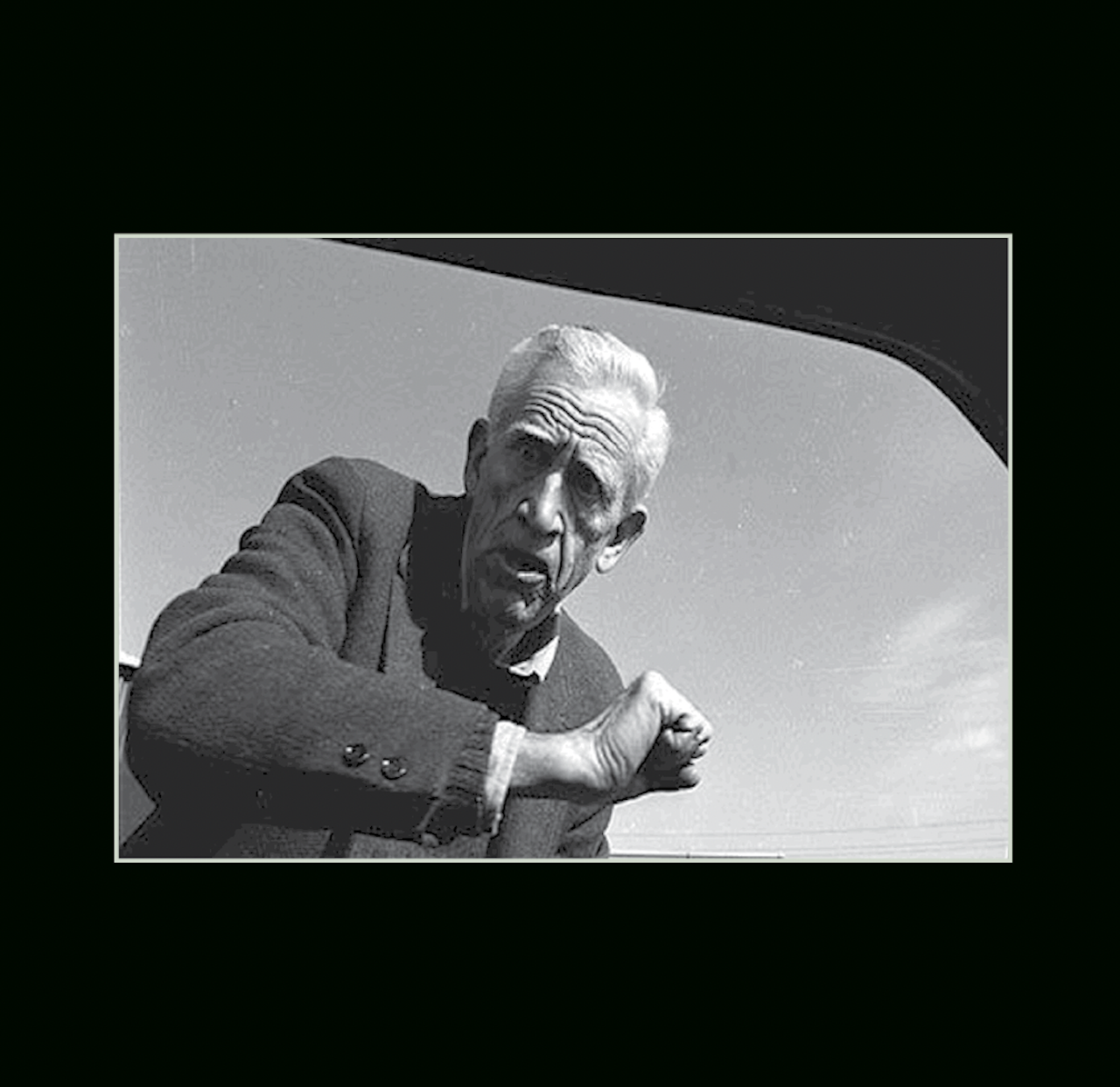
I did not want to return now to The Catcher in the Rye. I prefer that whatever fibers that youthful reading stirred in the reader I once was remain there, floating in the fog of being eighteen. I have gone back instead to the Nine Stories and the longer tales, and reading them I have wondered whether what ultimately interests us in Salinger is not so much his literature as his erasure, his ill temper: catching him in a photograph as he leaves the supermarket, realizing he is being watched, hurling the cart full of groceries and slinking away cursing. Because at this point, what sense does a Glass make with serious trouble getting over grief?
Nine Stories leaves us with the incomplete landscape of a writer weary of the world and on the run, with his simple syntax and direct dialogue, fruits of a finely tuned ear. There are three stories that best reveal the stature of their author: “A Perfect Day for Bananafish” (the most overfamiliar, initiatory for thousands of young writers, the one that inaugurates the Glass saga), “For Esmé—with Love and Squalor,” and “The Daumier-Smith’s Blue Period.” Characters that remain forever in the memory—therein lies the Salinger mark. An impeccable writer in his autistic revolú.
In “Zooey,” the second story in Franny and Zooey, there is a long—excessively long—conversation between Bessie Glass (the mother) and Zooey about what is happening to Franny. That dialogue, which more than one reader will find interminable and splashed with that impossible adjectival excess that is the house style, represents better than any other scene or episode the entire verbal architecture of Salinger’s narrative: always so dialogic and so exasperatingly devoted to miscommunication, something we had already witnessed brilliantly in the first and the last of the Nine Stories.
The stories always revolve around the same thing: those wise, precocious children who once starred in a popular radio quiz show have now grown up and become a reservoir of frustrations, mutual disconnection, incomprehension of the world—and their mother does not know what went wrong along the way.
Buddy Glass himself believed that the walls of his parents’ house were a kind of visual hymn to American commercial childhood and adolescence, even though what Salinger wants to show is the impossibility of getting ahead, life as a cul-de-sac. Toward the end, Zooey will also discover that his older brothers’ room is a sort of literary mural where a haiku can coexist with a Buddhist aphorism.
Lionel Trilling said that Scott Fitzgerald knew when “the world” was wrong, but was unable to perceive that it was “the world” that imposed the tragedy, whether upon the characters of his fiction or upon the author himself. With Salinger I experience the opposite: in his works the catastrophe has already occurred, and the world is fully aware and in its own way responsible, but the characters know that life, even if it has no meaning at all, must go on. Salinger took part in a war—his story “For Esmé—with Love and Squalor,” perhaps the most beautiful thing he ever wrote, makes this clear—and he knew the destruction of a world; his entire narrative universe is marked by that experience.
Someone has wanted to see Salinger’s silence as what follows verbosity. It cost him to contain himself, to keep quiet what he carried inside. And that silence is set against Beckett’s, more consistent with the idea of an ancestral silence, which is why Beckett’s syntax is stripped of all ornament. A Salinger who admired Hemingway and returned from a war he had fought in. A Beckett who once worked as Joyce’s secretary and ended up adopting a foreign language. Where can all this lead?
There are at least two Salinger stories in which an adult establishes some kind of interaction with a girl—two of them I have already mentioned above: “A Perfect Day for Bananafish” and “For Esmé—with Love and Squalor.” It also occurs in “Teddy,” though in a different way. Then, in “Zooey,” a moderately astute reader begins to suspect: where are you going to put your classic scene with a girl here? Immediately afterward, Zooey looks out the window and sees a girl walking a dog. It is quite clear that in none of these scenes is sexual desire made explicit; nevertheless, there are those who have insisted on rigorous readings and have seen in them traces of pedophilia.
Salinger had his own stories with young girls, as David Shields and Shane Salerno have documented in their book. He met Jean Miller when she was fourteen, and over the next five years he wrote her letters and invited her out. According to both authors, this was a pattern with him: he admired innocence, was seduced by it (by innocence), and became obsessed with girls in the flower of their age. He helped them to bloom and then blamed them for their youth.
To return to Salinger requires practicing a couple of skewed operations: to stop asking about his fate as a writer—at this point it matters little that Truman Capote claimed he kept writing or that some manuscript was returned—and also to stop considering him an author for adolescent readers. For years the mistake was to keep waiting for a posthumous magnum opus, that annihilating artifact that would restore him to the display cases. Nothing seems further from his true desire. His silence completes nothing; it confirms.
Perhaps that is why the key word is not innocence, nor purity, nor even silence, but the one mentioned at the beginning: squalor. Salinger does not parade it or exploit it; he recognizes it as a condition of the world after catastrophe. After the war, after childhood, after faith in language, writing a great deal might have been a form of infantilism. Not being prolific was not an eccentric gesture, but an aesthetic and moral decision: it was enough not to pretend that squalor was not there.


