The Letters of the Boom: the Map that Never Was
The Latin American “Boom” was a fiesta of letters and ruptures, where García Márquez, Vargas Llosa, Fuentes, and Cortázar wove a tapestry of powerful novels, revelry, and political fallout.
‘I’m Gone’ by Jean Echenoz, Goncourt Prize winner of 1999, bids farewell to the 20th century through Félix Ferrer, an art dealer navigating personal trials in a dehumanized world.
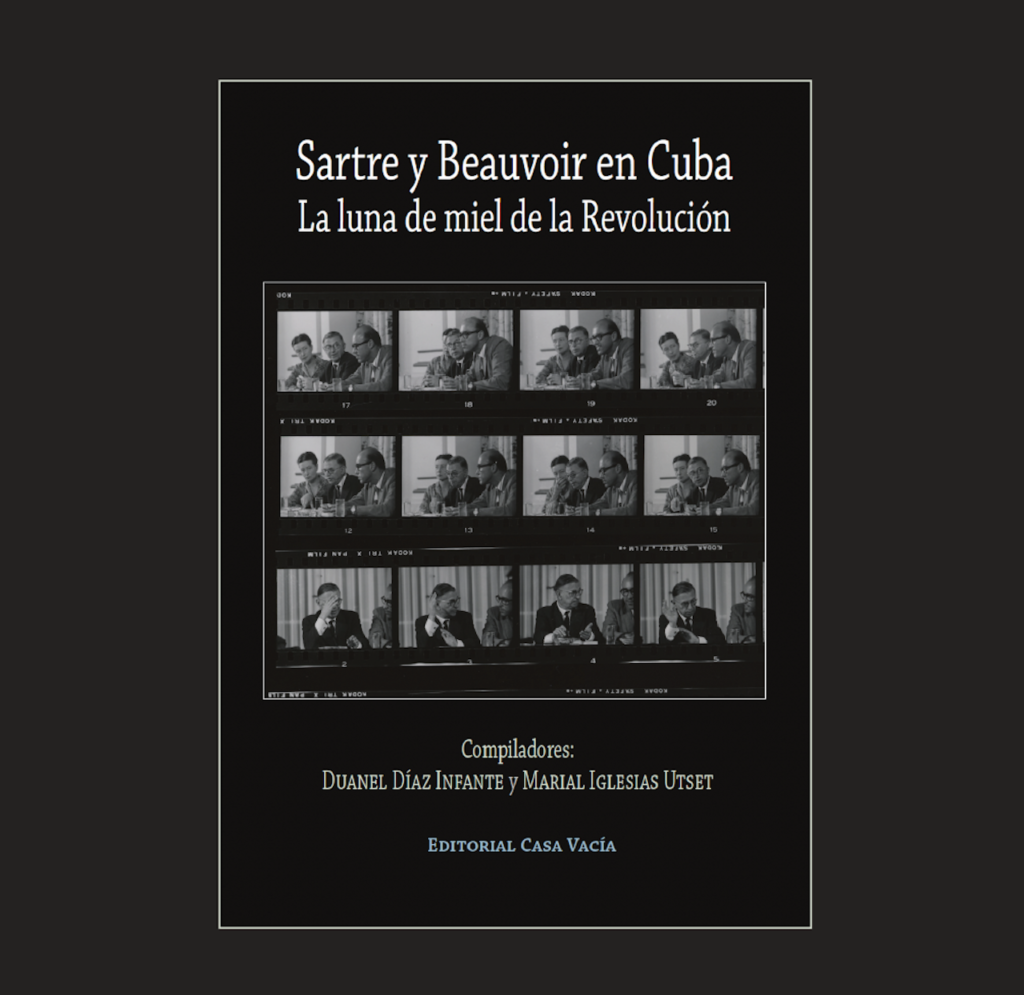
Sartre and Beauvoir’s 1960 visit to Cuba: revolutionary enthusiasm, cultural legitimation, ideological ambiguity, and later critical disillusionment.
Anne Carson, in The Beauty of the Husband, captivates with a unique voice that explores lost love and hope in loss. Legna Rodríguez Iglesias, in Miami Century Fox, creates vibrant poetry where words from Miami and Cuba collide in a game of Spanglish. Carme López Mercader, in Duelo sin brújula, offers a veiled testimony of mourning for Javier Marías, respecting his privacy.
‘What Are You Going Through’, narrated in the first person, is the human confession of a witness to death, in which Sigrid Nunez weaves humor, autofiction, and reflections on life and literature around an accompanied death.
Editorial Casa Vacía publishes ‘Notas sobre André Gide’ (2025) by Roger Martin du Gard, a volume celebrating his literary friendship with Gide and his legacy. At just over 100 pages, this book reads like a novel, evoking an enduring intellectual connection.
María Negroni has built a museum without walls in La idea natural (Acantilado, 2024), a mappa mundi in perpetual exodus