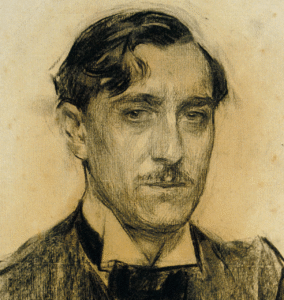
Ramiro de Maeztu was one of the most important writers of the turn of the century in Spain, just one step below the greatest, and that is saying a lot. In his youth, he was an inseparable friend of Baroja and Azorín, although with his own nuances: he was the most radical of the three. He began as a socialist, or rather a theoretical anarchist, and ended up embracing fascism and dying at the hands of the communists during the Spanish Civil War. Everything a good reader wants to know about his biography, his controversies, and his relationships with his contemporaries can be found in Los nietos del Cid, the magnificent essay that Andrés Trapiello dedicated to the writers of the Generation of ’98. There is a new edition. You’re welcome.
What interests us here is that Ramiro had a close relationship with Cuba. His father, Manuel Maeztu, was born in Cienfuegos and was of Navarrese descent. He was a landowner, and his father is said to have held a high position in the Spanish general administration on the island, although we have not been able to confirm this information. Ramiro’s mother was Juana Whitney, a French woman born in Paris, where she met Manuel. In addition to Ramiro, the union produced the painter Gustavo and the educator María. There were resources for several governesses.
In 1891, Ramiro settled in Cuba. Some sources say he did so to help the family with their business, while others say it was partly to evade justice and partly to save his life.
Violent by nature, a witness reported that during a fight he had struck someone on the head with a sledgehammer. Manuel died in Santa Clara (Las Villas) in 1898, leaving behind the ruin of the family businesses and a precarious economic situation for the clan.
Ramiro then moved to Havana, where he worked in various jobs, including as a reader in a tobacco factory, from which he left some written pages. Shortly afterwards, the family moved to Bilbao, and the rest, including the blots, is more or less well-known history.
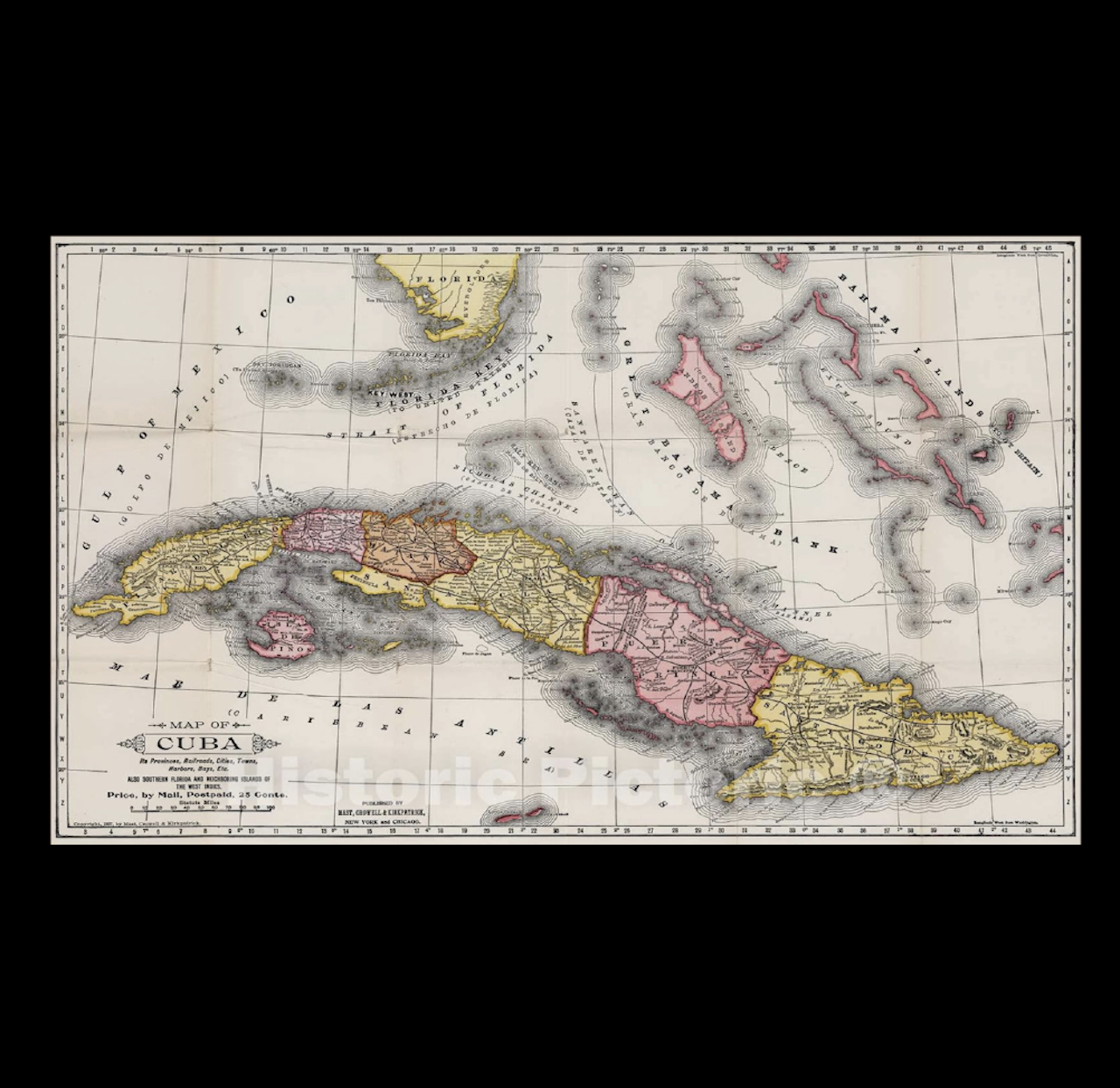
The following text, a chapter from his Autobiography, which was previously a newspaper column, was written in 1926 and highlights the economic hardships, not of his family, but of the land where he lived during his youth, hit by the instability of sugar prices and the uncertainty of its future. De Maeztu did not know this well. Despite this, the writer was seduced by a land deserving of better luck: “The beauty of Cuba is so complete that no description can do it justice.”
I note that it will soon be 100 years since this text was published. The concerns remain the same. In 1926, with sugar and a nascent democracy. In 2025, without sugar, millions in exile and still waiting for the rebirth of a country in democracy. We are aware that we are publishing this essay on October 20, the date on which the notes of the National Anthem were first sung in 1868 in the town of Bayamo.
Land of dreams, land of fairies, land of wonders! If I was not raised at your breast, your fields produced the cane that sustained me in my childhood: school and bread. Land of surprises! Today we are in tune, you, battered by the fury, and I, sick in bed. In the landscape of fallen trees, a feeble and mournful voice does not seem out of place.
Five years ago, Cuba received the first of its great shocks. At that time, it was not so much Cuba, the Beautiful, as Cuba, the Rich. “Inexhaustible treasure—and so much ambition!” says the Creole song. Cuba’s wealth was the unshakable dogma of all Cuban society: white and black, Cuban and Spanish. Sugar had been selling for more than 20 cents a pound. The country was swimming in gold. The port of Havana was crowded with ships loaded with the luxuries of the world. Suddenly, the price of sugar dropped to a penny a pound, and the banks went under. It was universal ruin.
At first, it was believed to be temporary, but the years have passed without sugar rising above two cents. It is a forced liquidation price. Either it is not enough to pay the settlers, or it is not enough to cover the costs of repairs and milling. The cost price has always been calculated at three cents. Technical improvements may have reduced it, but only slightly, very slightly. To work at two cents, you have to cut back, live on almost nothing, give up almost everything. And that in Cuba, the Rich, the land of inexhaustible fertility. But Cubans are not accustomed to a life of austerity. Cuba is paradise on earth. And yet, five deadly years are passing, one after another, without the price of sugar rising or any sign that it will rise soon. And Cubans are stoically learning that the wealth of the land is one thing and wealth is another.
This time, it is not Cuba, the Rich, that has surprised us, but Cuba, the Beautiful. The beauty of Cuba is so complete that no description can do it justice. Nor does it consist of what the eyes see, but of how good it feels to look at it. It is a landscape where desires are fulfilled. The land seems made for man to enjoy. When you contemplate a cane field swaying in the breeze, with the four palm trees at the top of the hill, you don’t think you’re in the countryside, because the idea of the city disappears. The countryside is a city, a home, and a palace. What one feels is the urge to shout: “No more anxiety and desire, restraint and restlessness, but here worries disappear and one begins to be able to live without willpower and sleep soundly.”
Cubans did not sleep soundly on the night of the hurricane. That is what meteorology is for. The observatories announced the coming and course of the fury in advance. The cyclone arrived on the Isle of Pines, where it left no wall standing and no stone upon a stone. It crossed the Greater Antilles from south to north, on both sides of the old trail. It will still whistle in the ears of those who lived through that night of terror. And the next morning, such excessive rain fell that all the horrors of the landscape were washed away. Witnesses say that between the columns of solid water that the skies poured down, fantastic plays of light could be seen, like devilish fireworks. They looked like beams of pine trees, but it was the sun, shining impassively through the water in a corner of the immaculate blue sky.
The witnesses of that night will never see the landscape of Cuba with the same eyes again. Lady Macbeth no longer has the face she had before for those who saw her leave Banque’s chamber, dagger in hand. Cuba, the Beautiful, will have the face of Medea for her children. Beneath her smile, they will feel her anger; beneath her finery, her rage. Her arms will not seem to them to be only chains of love, but levers of strangulation. Behind her beauty they will see the storm shining. They will always love her, they will always admire her, but until a generation emerges from the river Letheo that is unaware of her supreme anger, the voice of Cuba will no longer be that of idyll, but will be heard as the trumpets of Judgment Day.
I still await another surprise from Cuba. This time, it will be from Cuba, La Criolla. But let the speech be silent. I think of the homeless people and the houses that have been left without roofs. These November nights are usually cool, under the clear moon that reverberates in the mist. Let the speech be silent. Let charity speak.
(El Sol, Madrid, November 16, 1926. Later included in Autobiografía, Editora Nacional, Madrid, 1962. The original spelling has been respected).