
An age must have fallen very low indeed to discover courage and boldness in the very simple act of expressing one’s opinion.
Guy Pérez Cisneros
Comments, criticism, and reviews of books should not be limited only to what is being published in a given year. A review or piece of writing about a book should re-emerge on the occasion of closed and even open anniversaries of an author, as well as of his complete works—or even a single one—so long as that work has lost almost none of its written values and conceptual proposals.
The aspiration toward and arrival at all knowledge entails a conquest suffered in that first act of coming to know and then in the relative certainty of what has already been possessed, which is, in some way, also to know oneself ahead with respect to greater ignorance, to a certain innocence that it is not prudent to leave entirely behind.
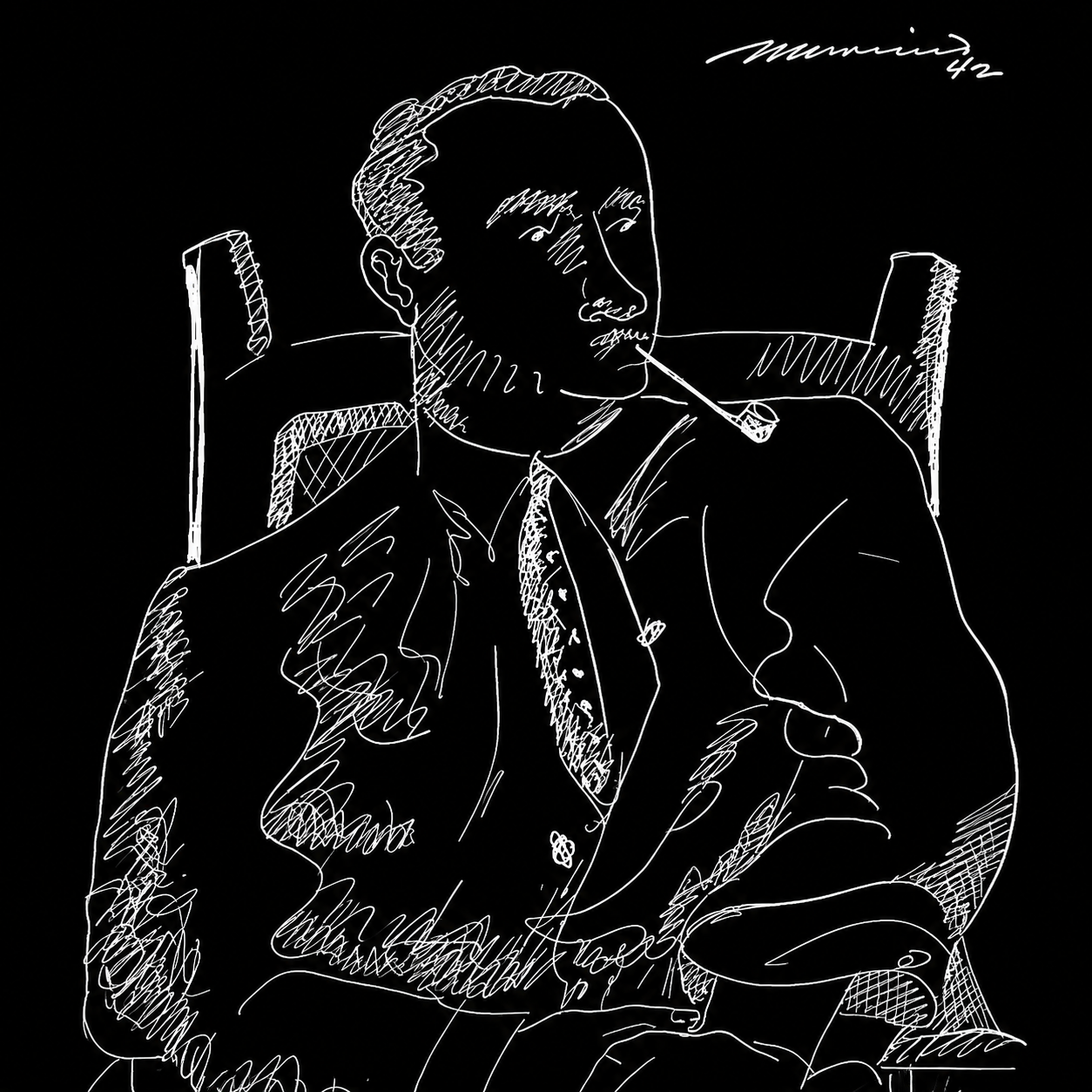
Of the more than fifteen years that Guy Pérez Cisneros (Paris, 1915–Havana, 1953) devoted to culture, he is usually remembered for his vocation as a magazine man, both in the technical and productive making of printed works and for his labor as critic and essayist in the many projects in which he collaborated. One cannot, likewise, overlook his chronicles in the newspaper Información, which complemented Pérez Cisneros’s integrative task as a cultural critic. Nor should one forget his 1946 doctoral thesis in Philosophy and Letters, Características de la evolución de la pintura en Cuba (siglos XVI, XVII y primera mitad del siglo XIX), and the catalogue La pintura colonial de Cuba (1950)… Although his most important articles, between chronicles and critical prose, can be found in Las estrategias de un crítico. Antología de la crítica de arte de Guy Pérez Cisneros (Editorial Letras Cubanas, 2000), a book with a prologue by Graziella Pogolotti and selection and notes by Luz Merino Acosta.
Las estrategias de un crítico, in addition to addressing a variety of national and foreign matters, could be subdivided into the following broad themes: Cuban colonial painting, and that of the first half of the twentieth century, especially that of the first avant-garde; sculpture; and art criticism.
One of Guy Pérez Cisneros’s most commented-on and cited texts is “Presencia de 8 pintores” (a lecture delivered in the hall of the Asociación de Estudiantes de Derecho of the University of Havana on June 2, 1937). It is his first major work of art criticism. First of all, what stands out is his reverence for a pertinent exhibition at the University, since it brings together an “exhibition of paintings, in which we find the true expression of our spiritual reality, for they have been painted amid the same difficulties in which we have lived, by painters who have wanted to explain us to ourselves.”¹ Therefore, Guy Pérez Cisneros—as Ortega y Gasset would say—sets out to prepare the spectator’s gaze for the author’s work, although before and throughout the lecture there appears, here and there, an ethical invitation, related to the value of art criticism, which must be exercised by one who knows the work and the artist. Not in vain does he note: “Let us realize that the dilettante and the amateur are invading everything, when it is not the man without standing who, under the shelter of his misery, installs himself in posts that ought to be reserved for men of the most proven worth.”² For artists need the public, but not just any public: rather, one trained in looking.
Of the eight painters—Fidelio Ponce, Arístides Fernández, Amelia Peláez, Antonio Gattorno, Carlos Enríquez, Víctor Manuel, Jorge Arche, Eduardo Abela—the ones who come off best are Arístides Fernández and, above all, Abela, who, according to Guy, is “the one who has the reaction of greatest vitality.” He then attributes to his work something somewhat debatable: “In his painting one recognizes the feeling that art must awaken the sensibility of a people,”³ when this should occur, and in fact does occur, the other way around. The critic then outlines the main traits of an ambitious and limited ideo-aesthetic and artistic program because, as Graziella Pogolotti points out in the prologue to Las estrategias…: “The battlefield is still poorly defined.” In short, in “Presencia…” Guy Pérez Cisneros appears very daring, ironic, and unfair in some of his judgments. He still lacks a critical tone and an overall vision, which he would attain in less than five years with longer and sharper texts.
In “Guy Pérez Cisneros, a seis décadas de su tránsito,”⁴ its author, Roberto Méndez, highlights “Presencia de 8 pintores,” “Sexo, símbolo y paisaje; a propósito de Mariano,” “La pintura de Cézanne,” and “Enlaces de líneas en Portocarrero.” Perhaps the informed reader would add “Víctor Manuel y la pintura cubana contemporánea,” a text that can be read as a very ironic continuation—although Guy’s irony never becomes mordant and is typical of his style—of “Presencia…,” and to a certain extent a surpassed one, although here he appears more panoramic in his object of analysis as he historically reviews the most important milestones of Cuban visual discourse from the colonial period to the most representative figures of the Cuban twentieth century. There is a moment in the text where he refers to the mediating or guiding function of art criticism from his own experience, an experience he decides to share and therefore generalize: “In my dedication to the study of Cuban painting I have become convinced that what the public most needs in order to orient itself within an art it still knows so badly is a scale of values that decisively distributes the places of honor and the rest.”⁵
Another of the aspects that stand out in “Víctor Manuel y la pintura cubana contemporánea” is the one related to the pros and cons of the academy and landscape, two simultaneous expressions that Pérez Cisneros tends to separate and even to set in contrast in terms of both technical-formal achievements and spirit and vocation. This was a constant in his lectures and texts in general. Nevertheless, in 1940, one year before the aforementioned text, he delivered the lecture “Paisajismo y Academicismo,” in which he recalls the points of contact between academy and landscape in order to return to what he had well assimilated. A longer quotation is now useful. He writes:
However, I believe that between Landaluze and Melero we must place a pictorial tendency that, while fundamentally somewhat academic, did not refuse to confront the Cuban motif. I refer to the landscape line that emerges with Chartrand, Cleenewerk, Sanz Carta and that still finds some representatives among us such as Mariano Miguel, Domingo Ramos, Canal Ripoll, etc.
I say that this tendency is somewhat academic because, like the academy, it has a love for the ready-made formula, for the sure result. Almost always the formula is imported from Europe in accordance with the fashion of the period: with Chartrand and Cleenewerk, the style of the Barbizon School would reign, nature still colorless, but already well drawn and secure in the manner of Courbet and Rousseau. With Sanz Carta, certain glimmers of Spanish Impressionism already appear, which develops greatly in the clamor of colors of a Mariano Miguel; finally, with Ramos and with Canal Ripoll, we find a nature powdered with confetti as after a day of carnival: they open in Cuba the tendency of the international Impressionism of Sunday painters.
And, after a paragraph, he specifies:
However, these artists cannot be called completely academic. The mere fact of confronting nature, of opening their eyes to it, indicates a vitality far superior to that of the painter stubbornly shut up in his atelier. The true academic will never be a landscape painter; he is too intent on obtaining a stylization, a compromise between the pretty and the majestic, to concern himself with truth.⁶
In the texts in which Guy Pérez Cisneros deals with art criticism, essentially painting criticism, his early chronicle “Del objeto y del sujeto en la crítica” is quite surprising, for in it he reveals his method or comprehensive approach, sustained by an admirable cultural background: “In art criticism there is only one path: to look at the work, to speak, and to add: thus do I speak.”⁷ In “Cuidado, pinta,” he offers more than one declaration of principles as he moves from the personal to what may be general:
In the field of criticism, then, the relation without direction and without affirmation is useless and depressing; deceptive and false is the “yes” to which some resounding “Noes” do not give meaning. Alongside scalping and Plutarchism, another school must rise, one that throws us fully into the midst of facts and forces, one that reveals them to us as friends or enemies, one that gives us a world filled with dignified matter upon which intelligence, force, and sensibility may affirm themselves by resisting or impelling. In this, imagination must give much; it must give the plot, it must indicate the date of the committed final nuptials or the anniversary of the traitor’s death.
It is in this critical “novelism” that, intuitively at first and knowingly later, I have definitively anchored myself, to the great displeasure of those who in my novel played the role of Iago.⁸
If there is a text that possesses incredible relevance, since it is both a class in artistic appreciation and an aesthetic lesson, it is “La crítica de arte y la prensa,” where he establishes the importance of criticism in the elevation of national culture; but first he recognizes the close relationship that must exist between the creator and his possible recipient, whether specialized or not. The artist, then, needs the critic, in order for the critic to position the work before a given public, which needs education in matters of taste and must be granted it through the press, even while enjoying other possibilities. Take note:
Naturally, for this labor of elevating national culture, such as that implied by the creation of an intelligent public, the cooperation of the fourth estate of the State is absolutely indispensable: the press; criticism in fixed sections and in responsible and independent hands is indispensable; the abundance of reproductions of national and foreign works; translations; writings oriented toward an intense and clear perception of works by the spectator, without too much concern for dogmatisms or overly objective biographical data.⁹
Pérez Cisneros advocates for certain essential conditions of good criticism in any period: that is, less convoluted terminology or fewer technical-formal elements, and precise information about artists. A biographical fact will not explain the work to you. Criticism must review everything that has taken place in the visual arts, with the purpose of giving priority to painting as the representation of its author. Not in vain does he demand:
We cannot really console ourselves with this reason for the public’s incomprehension in relation to modern works. A people for whom art means nothing loses its civilization. We must all make our effort to readapt the people’s retina before works of art, and to pronounce, without surrealist literature, the four or five phrases sufficient to create in every truly sensitive spirit the appetite for and intelligence of modern painting, which is the painting of our century, which is our painting.¹⁰
He preferred criticism with essayistic projections as a legitimating and communicative expression of the work of others. He did so even in his shortest texts. A supporter of Oscar Wilde’s “critic as artist,” he possessed a discourse that was shrewd, daring, and necessary. In cultural matters, he was aware of everything happening in Cuba and abroad. Alongside the outstanding prose of Jorge Mañach and José Lezama Lima—there were others, such as those of Gómez Sicre, Ichaso, Suárez Solís…—Guy Pérez Cisneros still stands out in this country, where many exercise a judgment that tends to last no longer than a meringue at the schoolhouse door.
Notes
¹ Las estrategias de un crítico. Antología de la crítica de arte de Guy Pérez Cisneros. Prologue by Graziella Pogolotti. Selection and notes by Luz Merino Acosta. Editorial Letras Cubanas, p. 82.
² Ibid., p. 85.
³ Ibid., p. 89.
⁴ Roberto Méndez: “Guy Pérez Cisneros, a seis décadas de su tránsito.” Revista Palabra Nueva. Year XXI, February 2013. No. 226, pp. 62–67.
⁵ Las estrategias de un crítico, p. 117.
⁶ Ibid., pp. 301–302.
⁷ Ibid., p. 24.
⁸ Ibid., p. 327.
⁹ Ibid., p. 338.
¹⁰ Ibid., p. 342.
Image: Photoshop recreation, white on black, based on a drawing of Guy Pérez Cisneros by Mariano Rodríguez.


